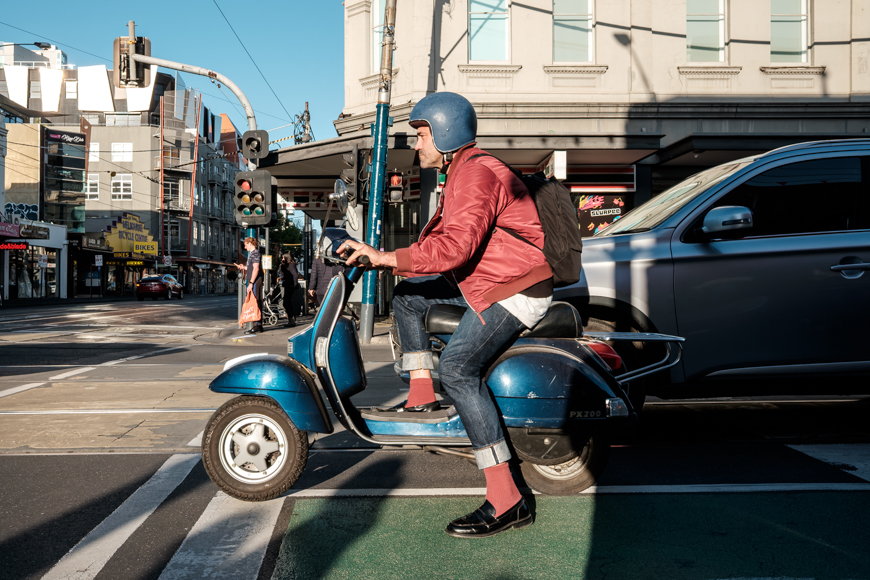
Hi, and welcome to my blog, where I document my life as a photographer, writer, workshop operator, educator, and podcast host. I’m also a dad with a Brady Bunch family and a house full of pets. Whilst family are my number one priority in life, I find it interesting to reflect on and realise that over the past month or two, all I have thought about has been photography. With the recent launch of my Street Level Photography Workshops, the additional work I have done in support of the Bright Festival of Photography (BFOP), the ongoing work with Lucky Straps and The Camera Life Podcast, and my own photographic pursuits, I have had a lot to think about. Photography is more than a hobby or interest. It’s my life, my way of connecting with community, my primary source of income, and how I have defined myself. When people ask me what I do for a living, my confident response is: I’m a photographer. I am always thinking about photography and am rigorous about keeping my camera close at hand. As a result, when the light calls to me, I am moments away from documenting a scene in time and space.
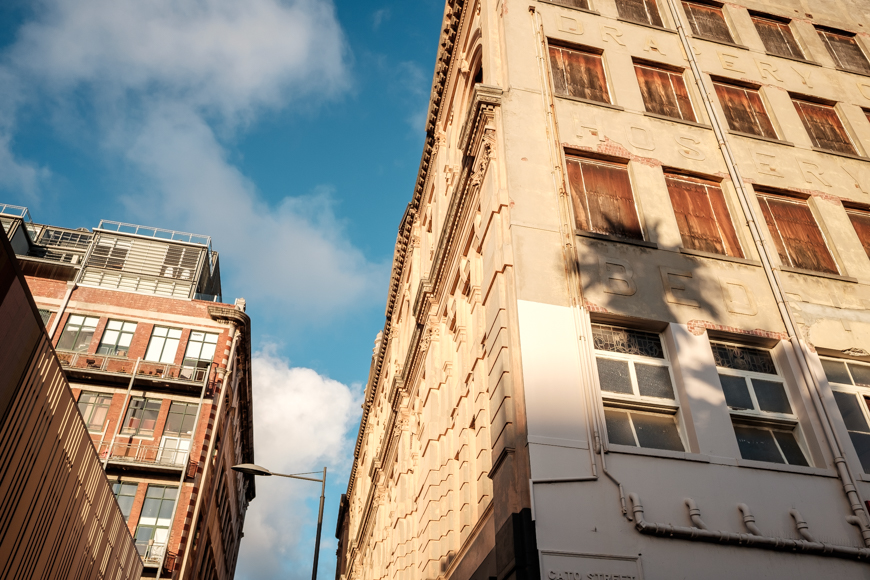
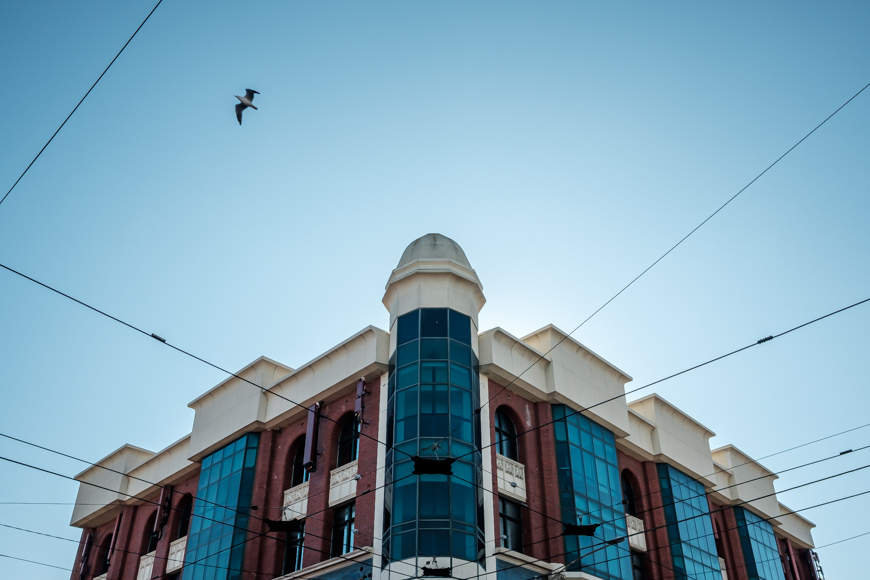
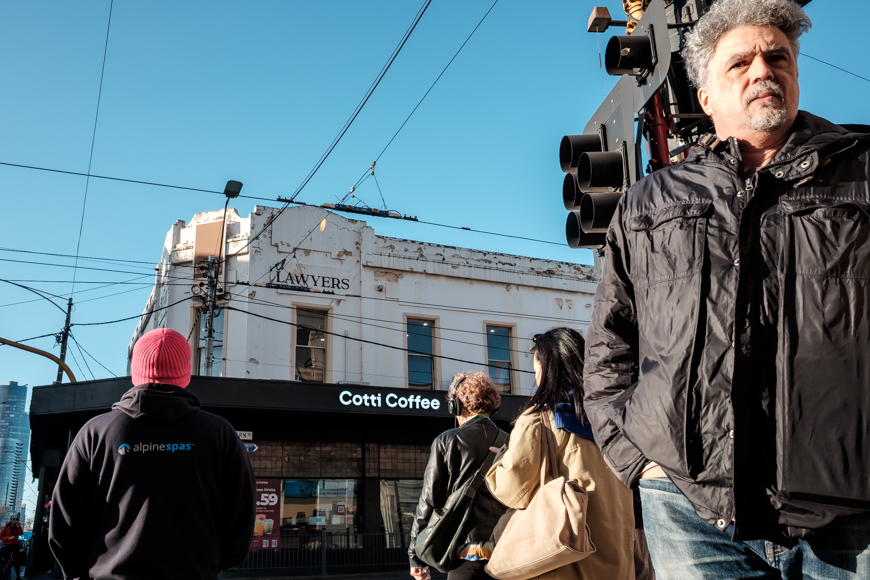
In this article, I want to discuss the importance and benefits of working with a familiar scene close to home. There’s a lot to learn from working around your home, business, main street, or even postcode. For me, my home neighbourhood is Prahran / South Yarra. Part of the City of Stonnington, Prahran is one of Melbourne’s oldest suburbs. It recorded its first residence in 1841, and it wasn’t until 1855 that Prahran was officially recognised as a municipal district. For comparison, the City of Melbourne is 191 years old. As for South Yarra, it’s now 186 years old, with European colonists settling there in 1835 (ish). There’s a huge amount of history connected to this area, and while much of the proof of that history has been demolished or buried, it’s there if you know where to look. Especially when you consider the typical architectural styles of the past 185 years. Beginning with the early Gold Rush settlement, Prahran still has standing examples of the Victorian Era, Edwardian and Federation Periods, the Interwar Era, Post-War and Mid-Century Modernism, to the Contemporary and Adaptive Reuse era we see today. There are examples of these periods dotted all over Prahran, Windsor, South Yarra, and Toorak.
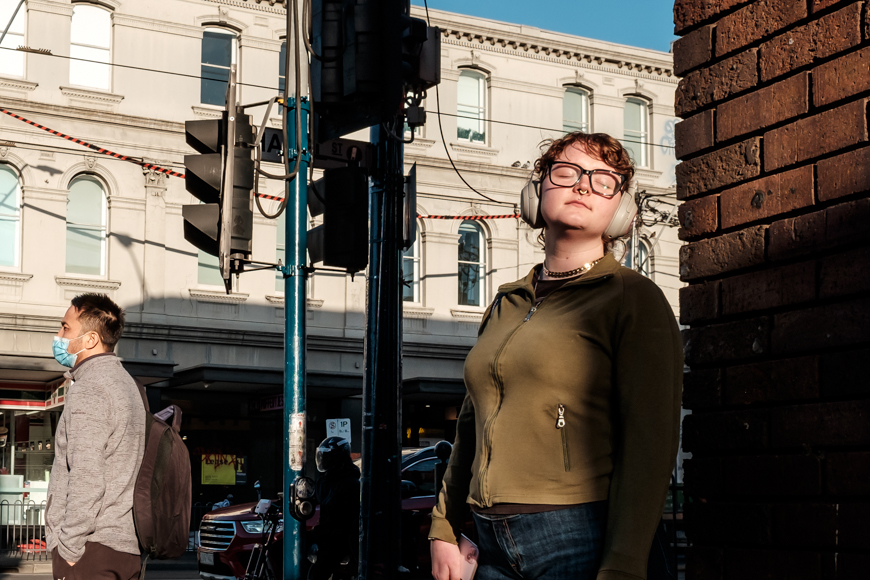
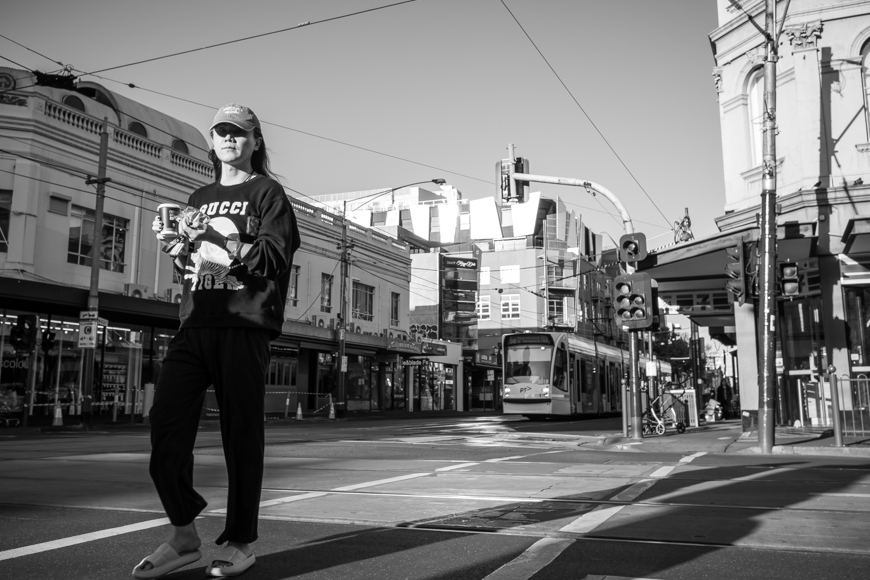
Of course, any suburb is more than its heritage and its architecture. As a street photographer, I work in my local neighbourhood to document how its inhabitants interact with the world around them. In that respect, I am a documentarian recording the people and places of such a diverse population. And I do it with the love of a local. When you consider the span of time and early colonial history, it’s no surprise that the City of Stonnington is home to a dynamic mix of folks. In addition to the expected English, Irish, Scottish, Chinese, and generational Australians, folks from all walks of life call this area home. Another interesting feature of the area is the diversity in wealth, with some of the most expensive homes in Australia situated so close to some of the county’s most financially vulnerable and displaced people. It is my pleasure and privilege to walk amongst my neighbours and document the time and space we occupy together. Now, let’s get into why working your local neighbourhood is good creative practice.
Repeat Presence Photography
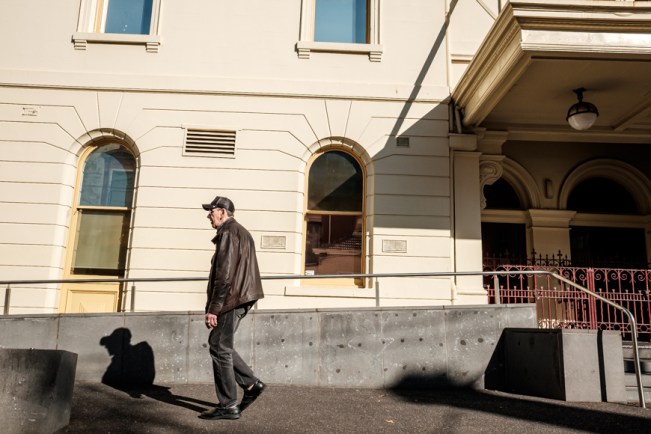
Repeat presence photography (RPP), a term I just made up, is all about working the same subject over and over to fully understand it, see what others take for granted, and master the photographic outcomes. In some genres, you can practice RPP by putting in the hours, showing up consistently, and improving your awareness of how best to document that subject or scene. Wildlife photographers don’t go out for an adventure once and then call it a day. Box ticked! They will often return to the same locations over and over while also trying to document their winged subjects from every possible angle and in all conditions. Only through Repeat Presence Photography can the wildlife photographer master their craft. The same applies to landscape, events, astro, and more. And of course, RPP is a powerful exercise in street photography! While I am only a little under 9 km from Melbourne’s CBD (arguably one of the best street photography destinations in the world), I have made it my intention to document my local neighbourhood as often as possible. Here are some of the benefits of Repeat Presence Photography as a street photographer:
- The more you show up, the greater the success rate of your outing, experience, and captured moments.
- RPP promotes a greater awareness of your local area, its history, and the people who live around you.
- A quick trip to your local main street or a walk around the suburb is a simple way to build on your camera knowledge and compositional skills.
- The more that you are out and about with your camera, the greater the chances of capturing decisive moments.
Know Thy Neighbour…Hood!
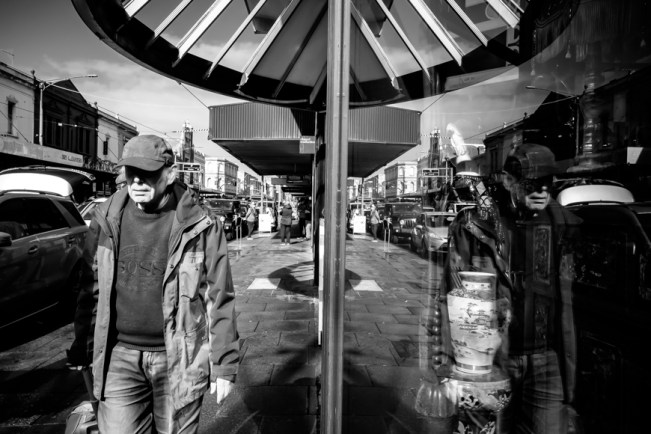
Another great benefit from Local Area Photography (LAP – I just made that one up too!) is that over time you will discover and work the best spots your area has to offer. But what makes somewhere the best spot? In street photography, some of the best spots involve pools or shafts of light, strong shadows, architectural and environmental elements, colour, typography, leading lines, and much more. By repeatedly working in your local area, you will, over time, identify the best locations that offer several street-photography elements. To take it a step further, you will come to learn the best times of day and year to unleash your RPP and hone your craft. Let’s be honest, you can’t master your LAP without a healthy dose of RPP! Given that I have lived in the Stonnington council area for over 30 years, I have developed a comprehensive awareness of the best areas to work based on those core street photography elements. Furthermore, I have developed an internal sundial that allows me to move to the best locations to optimise the light and seek out dynamic tonal values in my images. One bit of advice I often give is to use Google Maps on your phone and star locations where you have found great light and/or compositional elements. You could even make notes on the best time of day and year to work this area. If you are old-school, a small notebook and a pen/pencil should be a key part of your camera kit to document your light-hunting efforts.
Document Your Local Experience
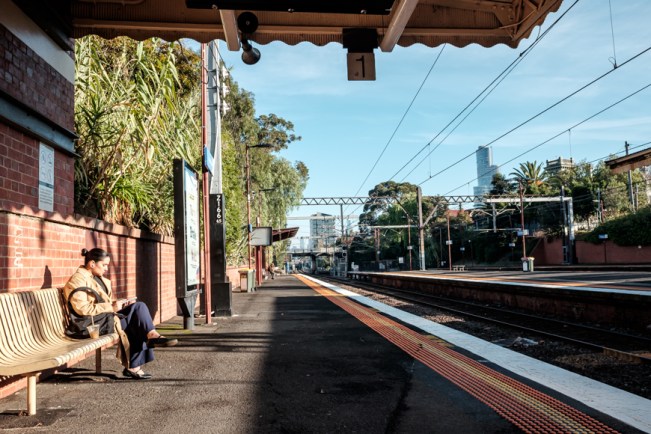
I have already mentioned my favourite motto of ‘document what is, before it becomes what was’. That statement is central to my photographic art practice. We live in an ever-changing world where the rate of change is moving faster than ever. As a street photographer, I step in to faithfully and accurately photograph what life was like during this period. Consider history books and documentaries that showcase photos from the turn of the last century. The images tell the story of a moment in time and a space that has passed, never to be repeated. If it were not for the photographers documenting those scenes, our understanding of history would be muted and incomplete. With that in mind, street photography is an excellent way to contribute to the local public record, but also to develop awareness and respect for the area you live in. A key part of that is to use your LAP much like a visual diary of your experiences. By documenting your interactions with your local area, you are part of the narrative that describes the inner workings and outward appearance of your neighbourhood.
Is That Project Worthy?
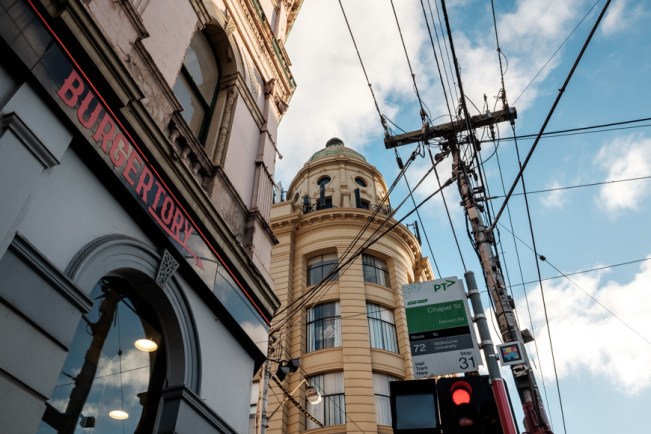
Photography projects are one of the best ways to work towards a defined goal by focusing on a dedicated topic, subject, or story. Many art-based photographers undertake projects that range from a small series of images to decades of exploration and observation of their subject matter. A photography project can and should be anything that you choose to focus on to build a collection of images to celebrate and raise awareness of that subject. Doing a local neighbourhood project is a great way to define your intention and have access to the subjects in question. I have been toying with the idea of a project focused on the Prahran Skate & Basketball Park and the community that occupies that space every day of the year. The project would focus on the individuals who use the park and how they became skaters, etc. The project will also place a strong focus on the power of community among skaters. Regardless of the project you have in mind, a local project offers many benefits. For one, you will have easier access to your subject matter or location. A project that requires you to fly interstate once a month will present all sorts of barriers. Another key benefit is being comfortable in and supported by your own community while documenting your project. If you’re viewed as an outsider, it could have a detrimental impact on your process, experience and outcomes.
Best Gear For Neighbourhood Activities
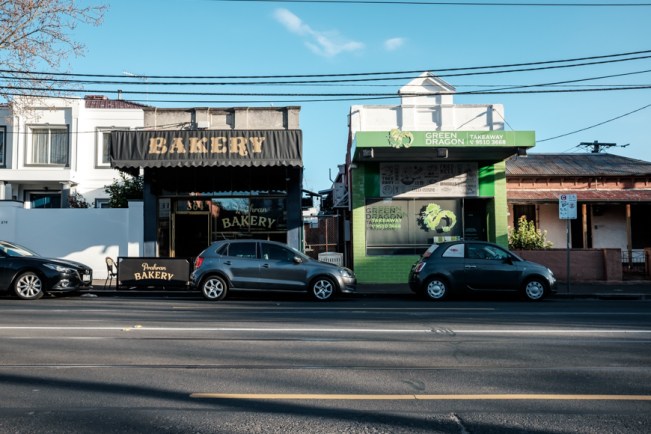
If you’ve been following me for a while, you will be familiar with my views on camera gear and the need-versus-want internal dialogue we all experience. Plus, the best gear for your LAP will obviously depend on what you are photographing and why. If you wanted to document all the wonderful flowers and plant life that exists in your local park or reserve, then you could achieve that with your smartphone. However, if your LAP has you photographing local birdlife or other wildlife, you will likely need a DSLR or mirrorless camera with a telephoto zoom or prime lens. The most important part of neighbourhood photography is to not make gear a barrier to your success. If you don’t have the gear for wildlife or even macro photography, perhaps a different genre is the answer. Regardless, heading out the door and into your hood should be a fun and mindful activity that teaches you about your craft and capabilities. If you pack a big camera bag full of glass and a pair of high-spec bodies, chances are you will not be out for long. The weight of your gear, plus gear choice paralysis, will quickly deteriorate your experience and joy of photography. Keep your gear choices simple. Use your smartphone, a cheap but compact point-and-shoot, or (for those who like a full-bodied camera) grab your DSLR or mirrorless camera and one lens only. Make it work.
Neighbourhood Posse!
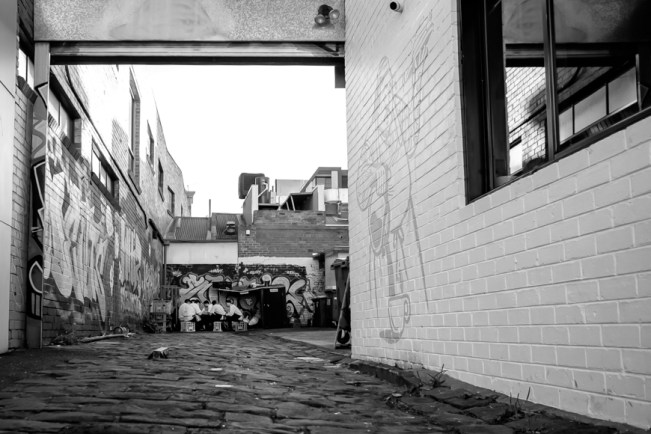
If you would prefer to do your local-area photography with someone else, it may be worth forming a posse to go out and hunt light. If you know of other photographers in your neighbourhood, consider inviting them to meet up for a street walk or a stroll through the local botanical gardens. Alternatively, consider making it an outing and experience that you share with your partner or children. Who knows, you may even form a local photography group (or join an existing one) and make it a regular monthly meetup with like-minded folks. I undertake the lion’s share of my street photography excursions solo. However, I also love catching up with peers and friends for a stroll, sharing experiences, and documenting our time together. I learn a huge amount from watching other photographers approach the same subjects or scenes as me. I get to see the world from their perspective. We could certainly do a lot more of that as a society.
Local Low-Down!
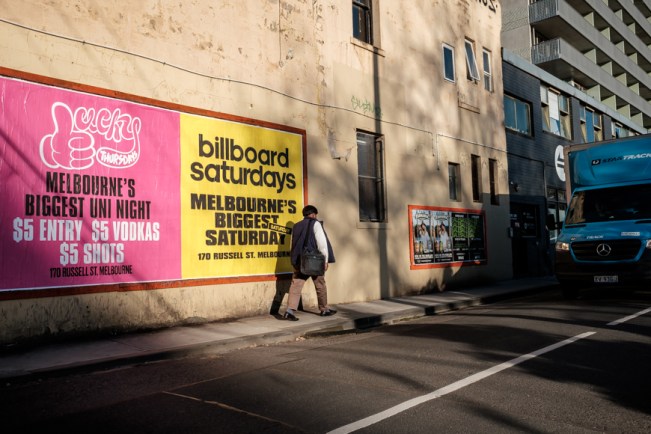
I hope you have found this article useful in some way. I guess the most important takeaway is to make the most of the photographic opportunities in your postcode. Take some time to consider your local neighbourhood, and create an opportunity to head out the door with a camera (any camera) to document what captures your gaze. Not only will you continue to hone your core skills and camera use, but you will develop a greater appreciation of your local area. Plus, getting out and about with a camera in hand is a great way to reduce stress, develop mindfulness, and challenge yourself to create a local body of work. Don’t even pack a camera bag. Grab your camera, choose a single lens, drop a spare battery in your pocket, and head out that door today! PS. All images in this article were captured with my compact Fujifilm X70 with its fixed XF 18.5mm F2.8 (28mm full-frame equivalent).


2 Responses to Hunting Light In My Local Hood!
Enjoying your work Greg – looking forward to catching up at BFOP
LikeLike
Thanks so much. Yes! Not long now. What day are you arriving in Bright? We are arriving the Wednesday before the festival. Can’t wait. Safe travels. G
LikeLike