Hi and welcome to my blog, where I document my life as a photographer and writer, podcast host, and more recently, photography workshop operator. That last bit is a work in progress, but it’s happening right now. I am finally offering guided street photography workshops in the heart of Melbourne (Australia). More on that another time. For now, let’s talk about the power of shifting your field of view and approaching your craft with a new set of eyes. First, a little context and history. I have been a Fujifilm X Series photographer since I picked up the first Fujifilm X100 compact digital mirrorless camera. When I first took up serious digital photography, I believed that it was important to invest in the best-known brand on the planet – Canon. While that’s up for debate, that was my mindset way back then. Of course, that proved to be a huge mistake as I invested in more and more Canon glass, thinking I needed a lens for every occasion. As I have documented here before, that decision proved to be a huge mistake as the weight of the gear quickly wore me down to the point where I nearly gave up on photography altogether.
Fortunately, someone recommended I try their OG Fujifilm X100 as we explored one of Melbourne’s now-famous Queen Victoria Market – Night Market. The little X100 was a pure delight to move about with and document moments quickly and effortlessly. I was sold! I sold all of my Canon gear and bought my own (pre-owned) copy of the X100. It wasn’t long before I caught the Fujifilm Fanboy bug and picked up the Fujifilm X-T1, Fujinon XF 16mm F1.4 and Fujinon XF 23mm F1.4 (the original versions). While all of those items were eventually sold to upgrade to newer models, I have never forgotten my first Fujifilm loves. Along the way, I have owned and/or reviewed most of the Fujifilm X bodies and lenses. In 2016, Fujifilm launched the tiny compact XF 23mm F2 R WR prime lens. At just 180 grams, the 23mm F2 was the ideal travel lens for my trips to Japan and my street photography go-to for hunting light here on the homeland. In 2019, Fujifilm added to the growing stable of compact prime lenses with the Fujinon XF 16mm F2.8 R WR. At 150 grams with a wider field of view (83.2° compared to the 23mm 63.4°), the 16mm focal range adds more context to scenes and creates dynamic perspective.
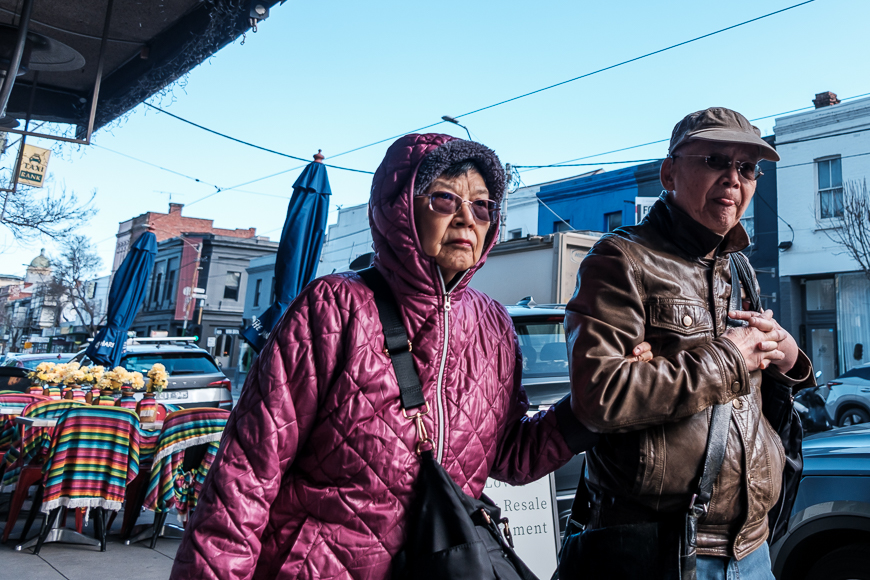
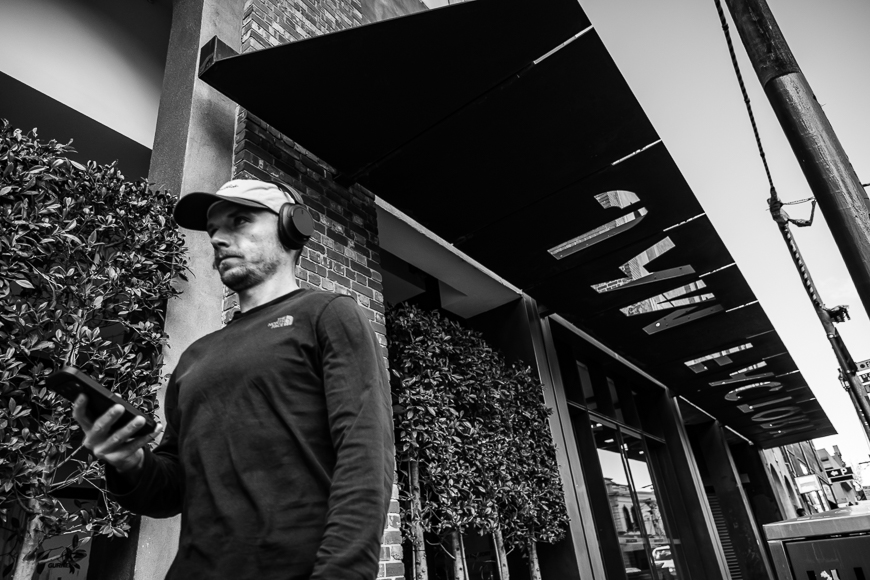
More recently, I invested in my art and purchased the 2022-released Fujinon XF 23mm F1.4 R LM WR and boy did I make a good choice. I won’t go into detail here as I have recently completed a review of the lens that you can read in greater detail. But it’s fast, sharp, and takes incredible images brimming with resolution and character. It takes pride of place on my Fujifilm X-E5 75% of the time. Every now and then I drop the Fujinon XF 16mm F2.8 wide prime on my camera and use this combination in my street excursions. The wider Field of view allows greater environmental context in my street scenes. Plus, a wider lens shot close to leading lines of down low will deliver compelling dynamic angles and strong leading lines. While F2.8 isn’t terribly fast for a prime, for the use cases I employ it for, it works a treat. I do find myself wishing it had the same shallow depth of field as the newer XF 23mm F1.4, allowing for purposeful subject separation and depth of field. And while Fujifilm updated the XF 23mm F1.4 for current-gen X cameras, Fujifilm still offer that original 16mm F1.4 with no upgrade in sight. The fact that Fujifilm still have faith in their 11-year-old fast, wide prime lens is a testament to their expertise as lens developers. However, it could do with faster autofocus and optical performance that optimises the newer 40MP image sensors in current-generation Fujifilm cameras. I am sure that Fujifilm will eventually release an updated version of the incredible wide prime. You can check out what is in my full kit in my blog article: What’s In My Camera Bag – 2026 Edition.
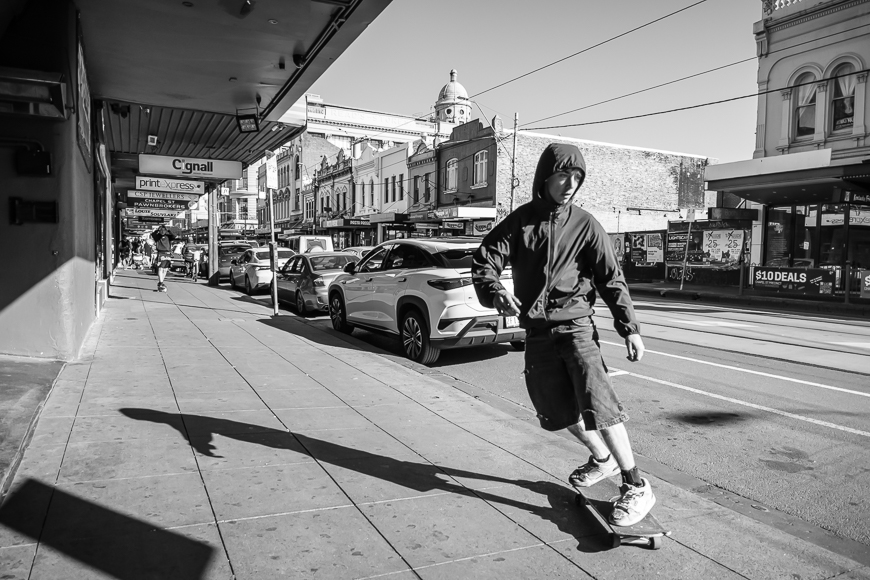
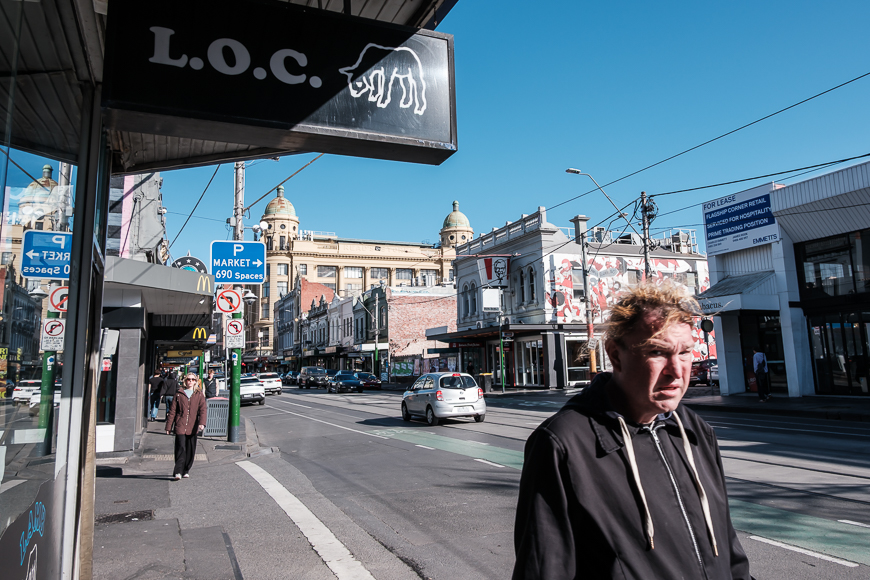
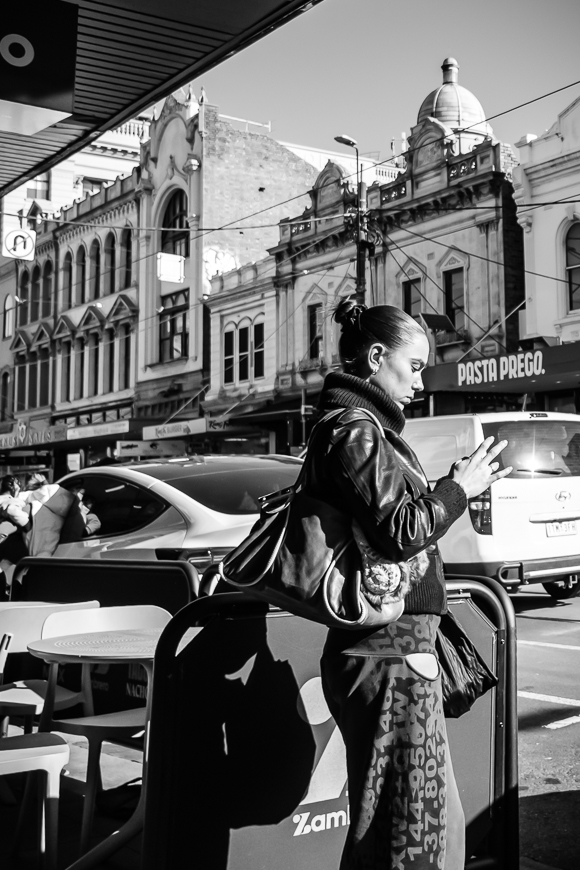
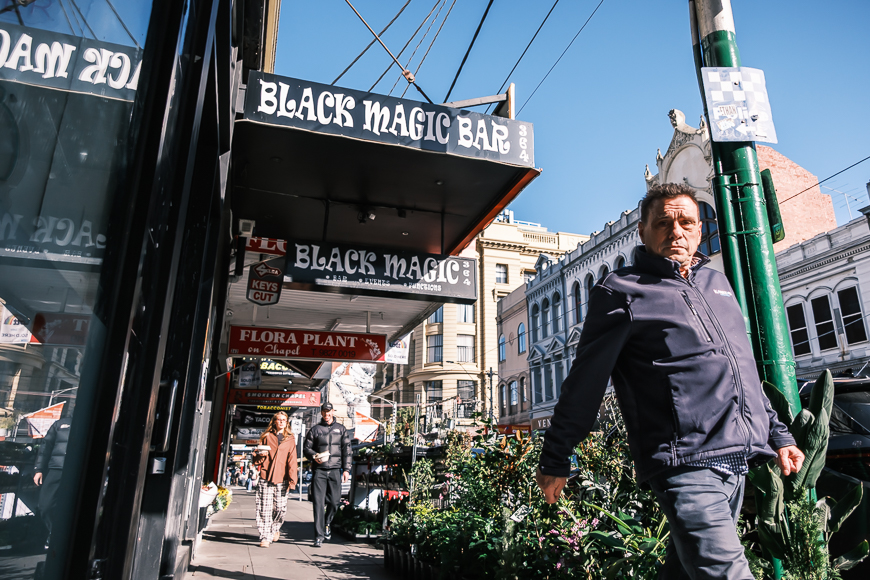
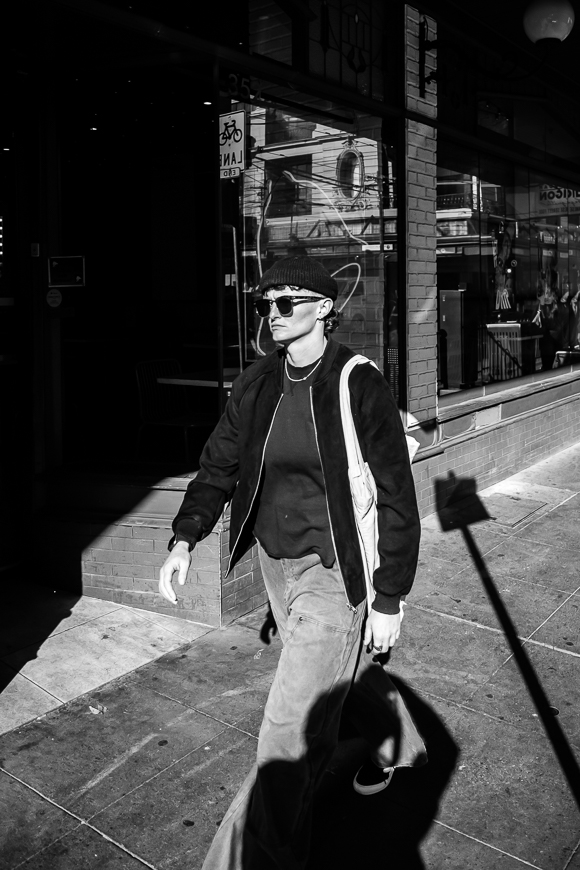
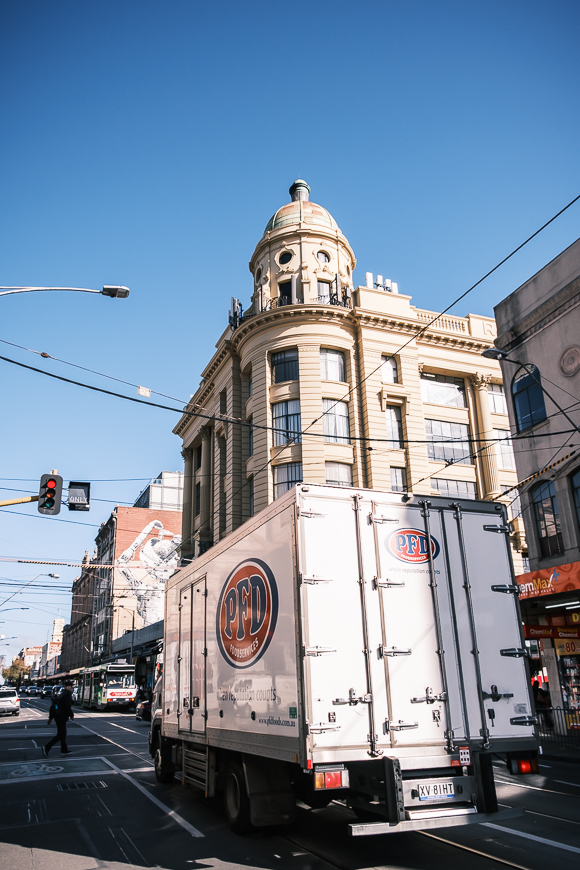
While we wait for a modernised version of that lens, we have the Fujifilm XF 16mm F2.8 for wide-angle work. As mentioned, the lens weighs a minuscule 155g and measures ø60.0mm x 45.4mm. It packs 10 lens elements in 8 groups (includes 2 aspherical elements), boasts a 9-bladed diaphragm, and supports a 49mm filter thread. In full-frame terms, the 16mm Fujifilm equates to a 24mm equivalent focal range. Wide without excessive distortion at the edges, the XF 16mm F2.8 is perfect for street scenes where you want to incorporate surrounding architecture and structures. The 17cm minimal focal distance is amazing, especially when composing images with a super-close foreground element and softening background blur. It’s not a bokeh beast, but it holds its own when it comes to subject separation. Once again, a new 16mm F1.4 would elevate these outcomes. You can check out my full review of the lens over at Shotkit.
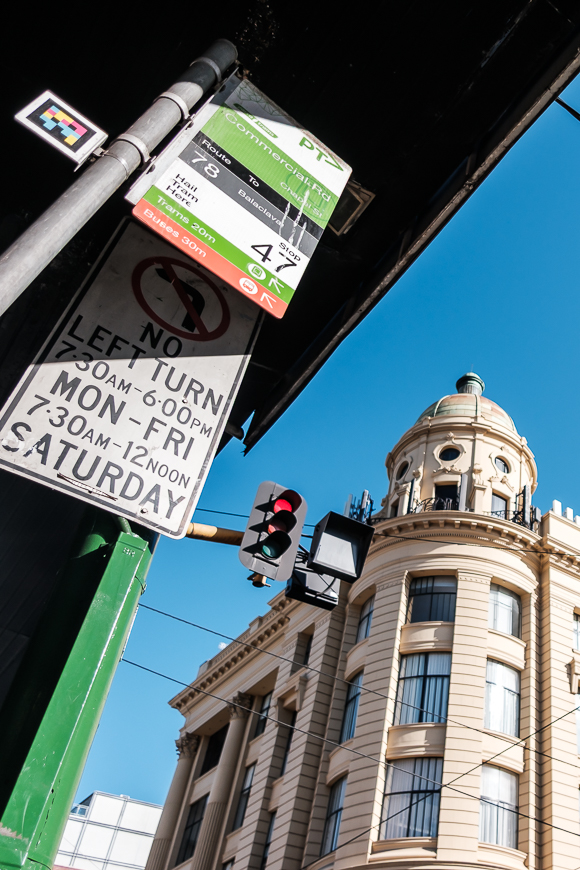
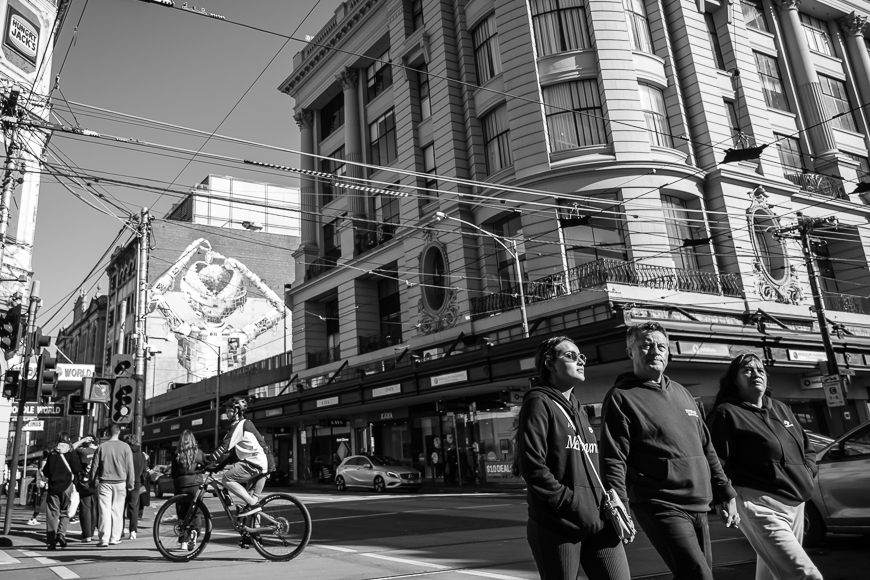
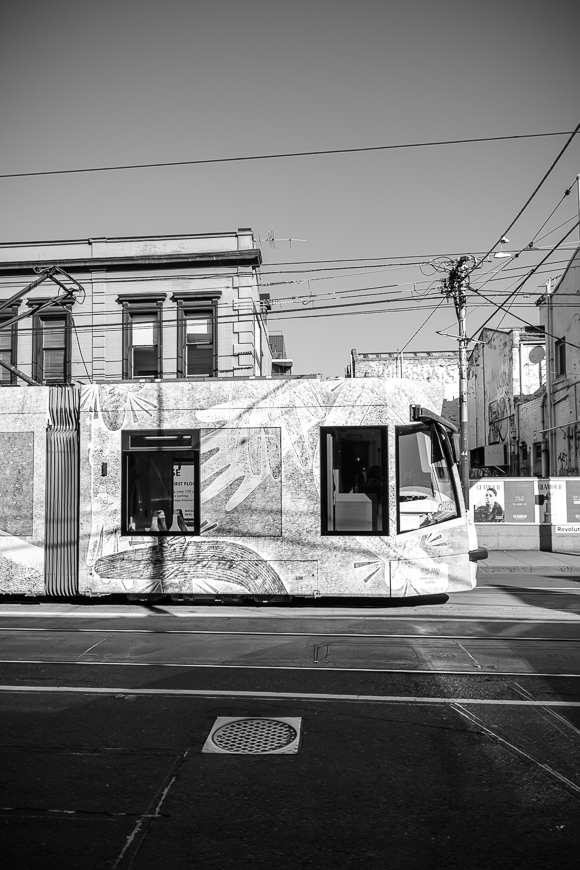
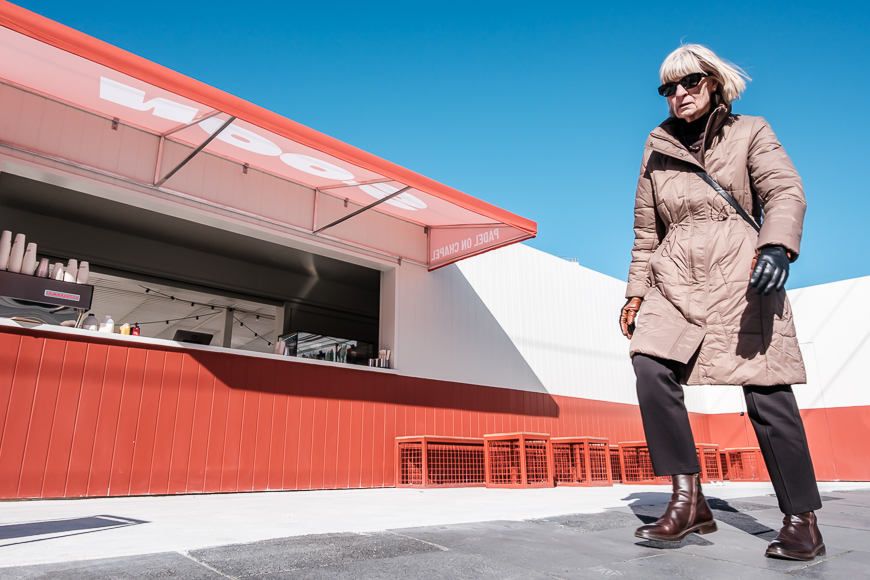
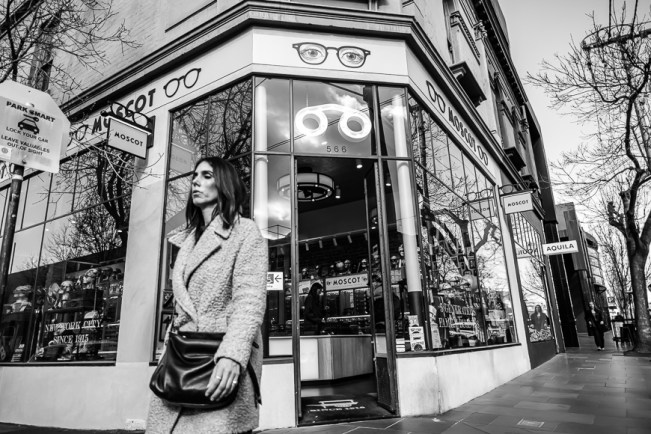
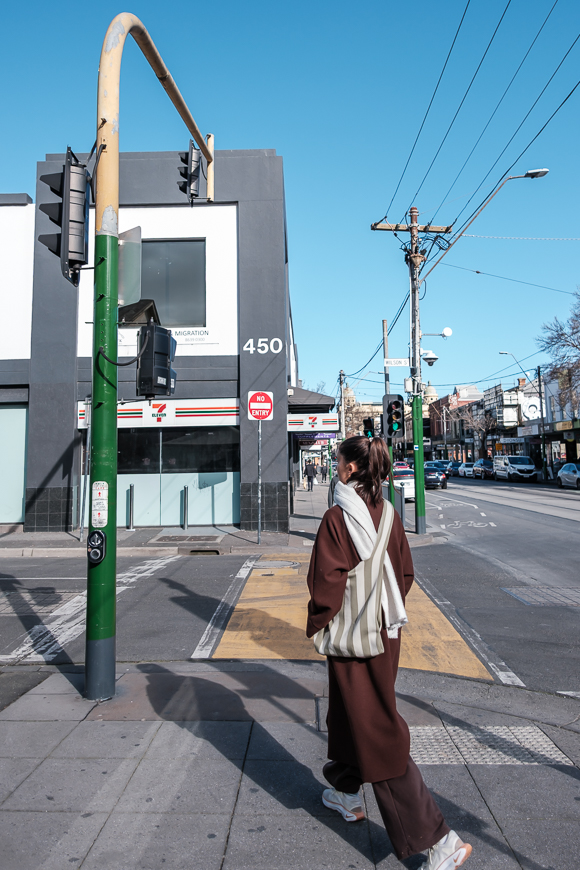
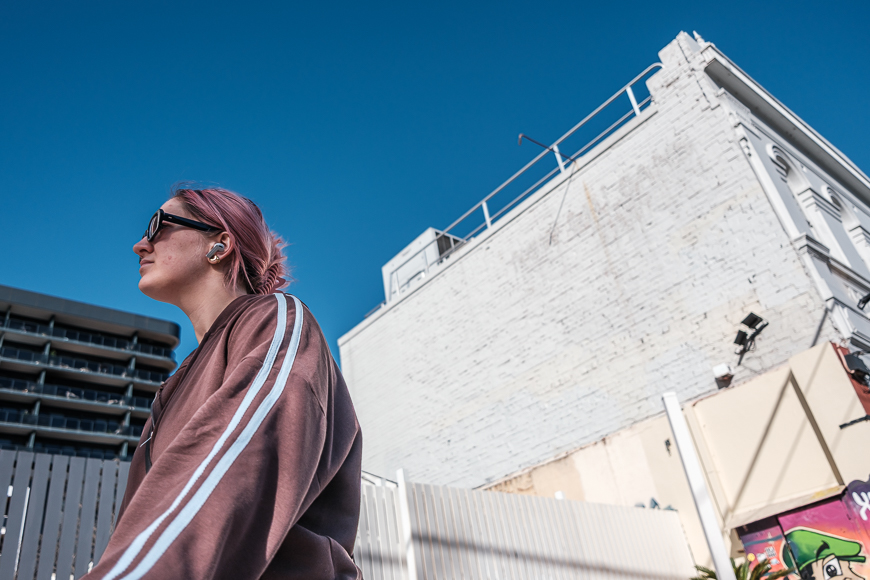
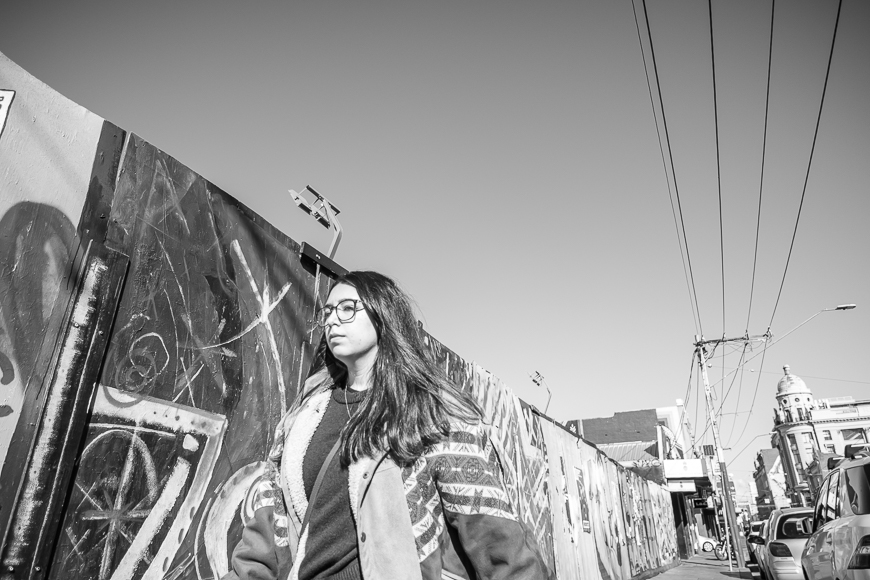
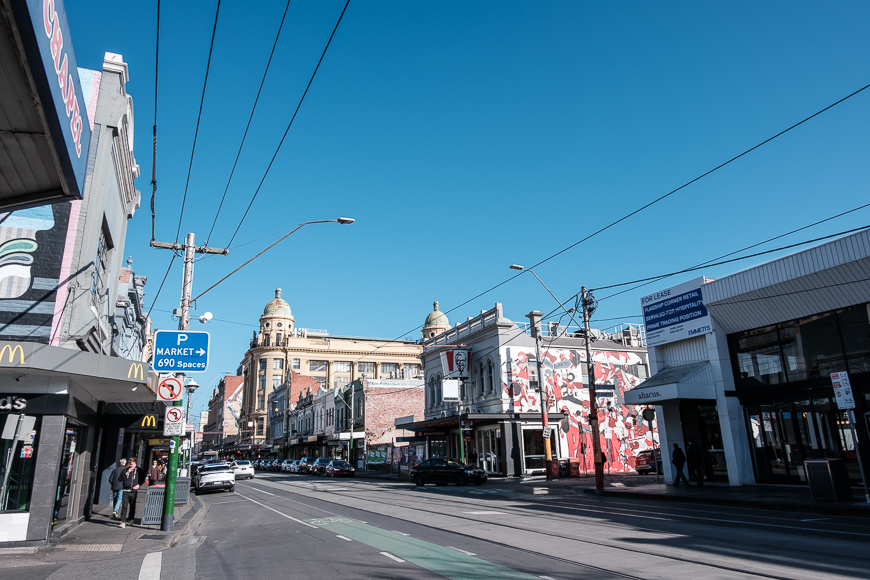
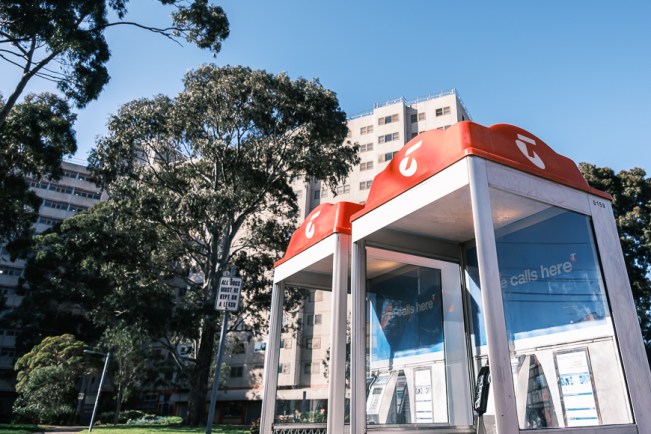
Last week, on a gorgeous and sunny day, I took a stroll on Chapel Street from Toorak Road (South Yarra) to Malvern/Commercial Road (Prahran). The travel distance is less than a kilometre, but on this day my creative eye was spoiled for imaging choice. I took my time strolling along Chapel Street with my Fujifilm X-E5 and the compact Fujinon XF 16mm F2.8. The combined weight of this kit is just 600g, and I carried the combo on the Lucky Straps Slim 30 Leather Camera Strap in all-black. (If you want to get your own Lucky Straps leather camera strap, use code Greg at checkout for a discount. Back to the walk. The light was incredible, and the Chapel Street lunchtime crowd gave me my choice of heroes for my compositions. I enjoyed using the wider field of view to build contextual and interesting scenes. I took my time making my way towards Malvern Road, and my elevated awareness of endless compositions forming before my eyes was intoxicating. The XF 16mm F2.8 proved once again to be highly capable and versatile, whether shot open at F2.8 or closed down to F8. I had a lot of creative fun going wide, and the joy of photography was bubbling away in my mind. All images here showcase the look and feel of the wide compact XF 16mm F2.8 prime. Be safe. G


One Response to Chapel Street, Prahran with the Fujifilm XF 16mm F2.8
[…] bit of glass. So getting reacquainted with some of my other lenses has been a lot of fun – especially that 16mm F2.8. Should the gods of glass smile on us, I would love to see Fujifilm replace their OG XF 16mm F1.4 […]
LikeLike