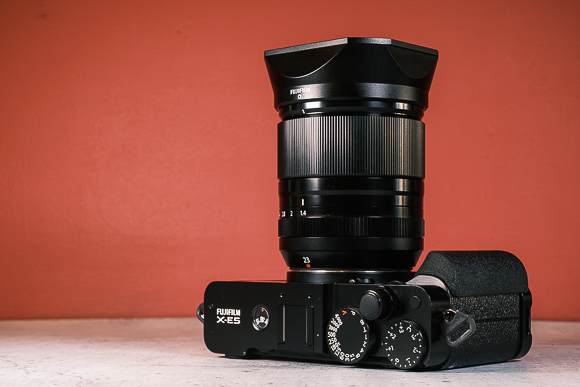
Hi, and welcome back to my blog, where I ponder and document my life as a photographer, writer, podcast co-host, and a bunch of other meaningful things. I have recently been putting in more and more effort to rejuvenate this site and elevate it to something more meaningful. If you’ve been paying attention, you will have seen that I have been pushing myself to add a new and purposeful blog post each week. Earlier in the year, I wrote What’s In My Camera Bag – 2026 Edition, where I detailed my Fujifilm camera and lens kit for the various genres and situations I find myself in that call for a camera. Of course, in my view, you always need a camera with you. Thankfully, iPhones cover any gaps where I don’t take a camera out for whatever reason. And then even more recently, like last week, I posted a gallery blog containing images shot with a new lens. In Prahran Skate Park With A New Fujinon Lens! I demonstrate my early efforts in shooting with the newly acquired Fujinon XF 23mm F1.4 R LM WR prime lens. I have been considering a new lens purchase for a month or so and have spent countless hours online and watching YouTube reviews.
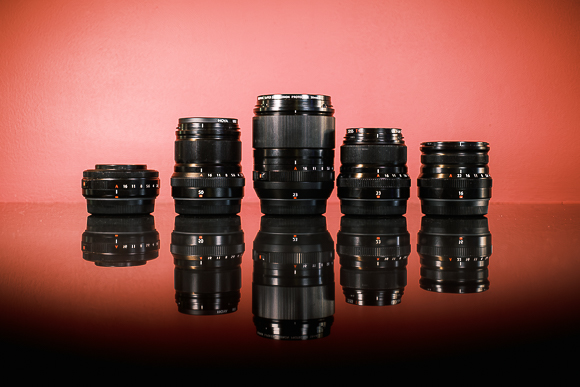
Before I tell you more about the XF 23mm F1.4, I want to share a bit about my research and thought process in selecting it. It will come as no surprise that I prefer to shoot with prime (fixed focal distance) lenses over zoom (variable focal distance) lenses. I like the reliability and often faster aperture of prime lenses – I also prefer to work with a prime and move myself to make a composition work. Zoom with my feet! If you jump back to What’s In My Camera Bag – 2026 Edition, it will become clear that I also prefer wider and standard prime lenses, including 16mm F2.8, 23mm F2, 27mm F2.8, 30mm F2.8 (Macro) and 50mm F2. These equate to 24mm, 35mm, 40mm, 45mm, and 75mm in full-frame equivalents. While I love all these lenses and circulate them fairly often (in terms of use), none of them has an especially wide max aperture. While F2 is nothing to complain about, in low light, they sometimes struggle. So I wanted something with a much shallower depth of field thanks to a faster max aperture. But what about the focal length? I considered a number of options, including something with more reach, such as the Fujifilm XF 90mm F2. To make sure that I was definitely against shooting with zooms, I even borrowed a couple of longer zoom lenses from Fujifilm Australia. I borrowed the XF 16-80mm F4 R OIS WR and the XF 55-200mm F3.5-4.8 R LM OIS. While I have shot with the 55-200mm years ago, I thought it was worth another shot. Turns out, while they are both excellent lenses, I definitely do not like shooting with zooms. That’s more about me than the lens’s performance, etc.
With the zooms out of the picture and longer focal lengths not drawing me to shoot farther, it was clear that I actually wanted a higher-quality, faster version of one of my existing focal lengths. It’s also worth pointing out that while my collection of lightweight, compact primes is amazing, they were all developed and released well before Fujifilm stepped up to flagship 40MP image sensors and snappy processors that drive focus performance. This meant that I was looking for a newer model lens to pair with my Fujifilm X-E5. Having also ruled out third-party glass (Fujinon glass is just so good), I turned my gaze to the Fujinon XF 23mm F1.4 and the XF 33mm F1.4. Both are modern pro-grade lens options featuring Fujifilm’s faster Linear Motor autofocus drives. Despite being larger, they are still relatively compact and lightweight. But which one would I go with?
And then it hit me: I had just spent weeks and weeks trying to work out which lens is best for my kit. But the answer was already in my kit – kind of. I no longer needed to fill a gap in the lineup. I needed to upgrade an existing lens. The Fujifilm XF 23mm F2 R WR is my most-used Fujinon compact lens. Not only is it lightweight, but it features fast autofocus performance and excellent image rendering. When it comes to an all-purpose EDC (Every Day Carry) lens, the XF 23mm is my go-to (followed closely by the even smaller XF 27mm F2.8). I love the 23mm (35mm full-frame equivalent) focal length, as it is useful for wider street scenes and for getting in close for dynamic angles and environmental portraits. The Fujinon XF 23mm F1.4 R LM WR suddenly became the best option, and its newer design pairs perfectly with the higher-resolution image sensor and faster processor in the X-E5. Once I had made this decision, I got in touch with my friends at Fujifilm Australia and ordered my copy. Having spent a few weeks playing with and testing the lens while out and about, I figured it was time for a first impressions review.
My First Impressions
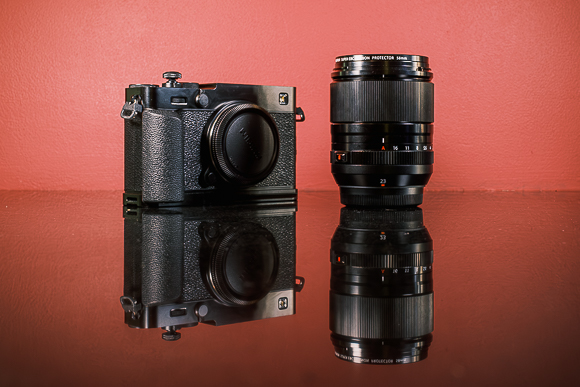
It’s fair to say that I was impressed with the Fujinon XF 23mm F1.4 R LM WR right out of the box. If I were to use only three words to describe that imrpession they would be solid, premium, and professional. It was late when I unboxed it, and the house was dark, but I instantly paired the new lens with my Fujifilm X-E5 and, sitting on the couch, took shots of everything in the room – especially the cats. I was instantly delighted with the lens’s performance and loved testing the maximum aperture to isolate subjects. The focus was fast and didn’t miss a beat, even in the very dark room. I was grinning the whole time. It’s also worth noting that years ago, when I first switched to the Fujifilm X Series, I bought two prime lenses. One was the XF 16mm F1.4 R WR, and the other was the original XF 23mm F1.4 R WR. Both lenses were all-metal tanks that featured a manual focus clutch system on the lens barrel. I initially paired these with the Fujifilm X-T1 (a classic camera I regret selling) and even took both lenses on my first trip to Tokyo in 2015. Over the years, I sold these lenses to streamline my kit to the smaller F2 primes. The new Fujifilm XF 23mm F1.4 with its Linear Motor focusing is leaps and bounds ahead of that original prime from 2015.
Fujinon XF 23mm F1.4 R LM WR Specifications
- Mount – Fujifilm X Mount
- Focal Distance – 23mm (35mm full-frame equivalent)
- Angle Of View – 63.4°
- Max Aperture – F1.4
- Min Aperture – F16
- Focus System – Linear Motor
- Weather Resistance – Yes
- Lens Configurations – 15 elements in 10 groups (2 aspherical and 3 ED elements)
- Minimum Focus Distance – 19cm
- Weight – 375g
- Dimensions – Ø67mm x 77.8mm
- Filter Size – Ø58mm
- Approx Cost – $$1,449.00 (AUD per Fujifilm Australia)
What’s The Build Quality Like?
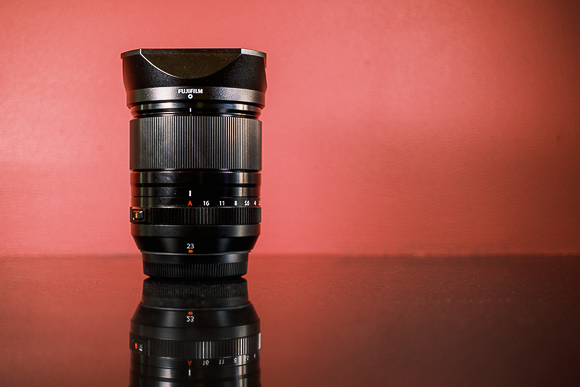
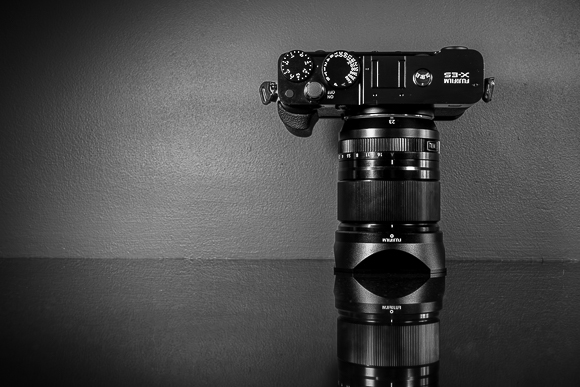
Fujifilm’s XF 23mm F1.4 R LM WR is a solid and incredibly robust lens. It features an all-metal body that felt premium the moment I lifted it out of its box. I often joke that you could hammer in nails with Fujifilm gear, and this 23mm F1.4 was no exception. The lens measures Ø67mm x 77.8mm and weighs 375g – it feels incredibly robust and has a perfect heft in the hand. The Fujifilm X-E5, with a battery and SD card on board, weighs 445g. Add to that the SmallRig L-bracket with included grip (64g), the XF 23mm F1.4 with its new lens hood and the total kit weighs 934g. That’s heavier than I am used to carrying, but it is still manageable, provided I am mindful of how I carry it on walks. For comparison, the Fujifilm XF 23mm F2 R WR weighs 180g, and the pancake XF 27mm F2.8 R WR weighs just 84g.
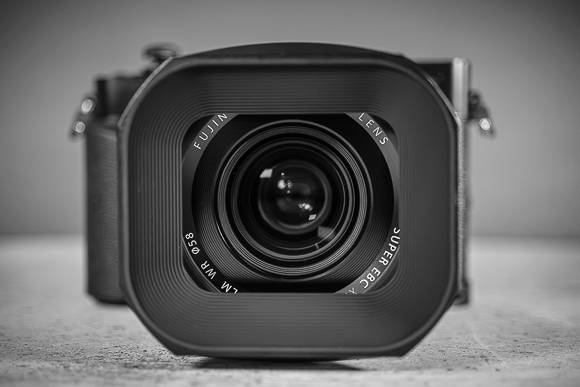
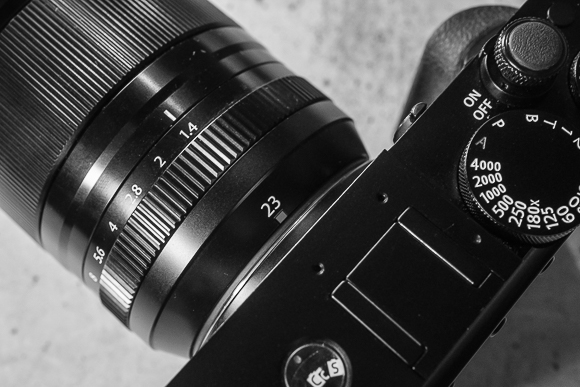
The 23mm F1.4 R LM WR has a number of features evident in its title. The R indicates that the lens has a manual aperture ring, including an Auto lock with a quick-release button. The LM refers to the Linear Motors driving the lenses’ fast focus performance – more on that later. Finally, the WR refers to the lens being Weather Resistant, as it features a weather-sealed build including a rubber gasket surrounding the metal lens mount. The front of the lens has an Ø58mm filter thread, and I have added a Fujifilm Fujinon 58mm UV filter to protect the front element. I always add a clear filter to all of my lenses as soon as I take them out of the box. I see it as insurance against an accidental bump that would otherwise impact the fixed front element. It’s far easier and cheaper to replace a broken or cracked filter than to repair a lens. On the topic of add-ons, I also added the Fujiifilm square lens hood to replace the plastic petal-shaped one in the box. Not only is it another protective feature, but it also looks impressive.
Shooting Wide Open At F1.4

I took the Fujifilm X-E5 and XF 23mm F1.4 for a street walk in my local area to get a feel for how it handles. It was the first time in a long time that I had shot with an aperture faster than F2. When I shoot street photography, I usually set my aperture to F8 to ensure all elements are in sharp focus. But with this lens, I was instantly tempted to throw the aperture open wide and see what it could do. The F1.4 max aperture is amazing at clear subject separation between foreground and background elements – or vice versa. I spent that first morning walking along Chapel Street (South Yarra end) and focusing on subjects both near and far to better understand its abilities. At first, I would focus on inanimate objects on the street and even inside shop windows. After that first day, I took the camera and lens combo out for some street photography and ended up at the Prahran Skate and Basketball Park. I’ve written about this space before, and it is fast becoming one of my favourite local spots to hunt light. It was Golden Hour, and I spent a couple of hours watching and photographing the skaters and ball players while keeping a wide-open F1.4 aperture. Working with a shallow depth of field while photographing fast-moving subjects is not my forte. Thankfully, the camera and lens combo’s focus performance far exceeded my expectations and made those early experiments with a wide aperture much easier.
How’s The Focus Performance?

Paired with the new Fujifilm X-E5, the Fujinon XF 23mm F1.4 R LM WR is an incredibly responsive and fast focusing lens. The XF 23mm F.14 is designed to better support the new X-Trans 5 image sensor and X Processor 5 chip. My initial tests showed the aperture at F1.4 and focusing quickly between foreground and background elements. The response time was amazing, much faster than any of my other current lenses. Despite the extra bulk of glass elements, the Fujifilm Linear Motor focusing system was snappy and confident to say the least. I have never experienced an instance of focus-hunting, where the focus stumbles to acquire a subject and instead breathes in and out in confusion. The XF 23mm F1.4 nailed focus almost 100% of the time. I say almost, as there have been a handful of examples where the lens just couldn’t stick the landing. Rather than hunt, it kind of just froze where it was and failed to grab the target. I noticed that changing my focus from Single Point to Continuous prevented this from happening when photographing fast-moving subjects. Since owning the lens, I have tested and used a number of different subject detection modes and the Continuous Focus modes to find that sweet spot.

What Do The Images Tell Me?

Having shot exclusively with the new XF 23mm F1.4 R LM WR since it arrived, I am incredibly impressed with the image quality. Granted, it’s a new toy to play with, but I haven’t felt tempted to switch to a smaller lens or a different focal distance. On that note, it’s probably the best way to master and appreciate a new lens. Stick with the one lens for months to not only build your skill set but also to know that lens inside and out. After my first outing with the new combo at the Prahran Skate and Basketball Park, I couldn’t wait to see the final images on a bigger screen. I remember how astounded I was by the image quality and the richness of the details. Shooting at F8, the XF 23mm F1.4 delivers exceptional image sharpness across the entire frame. Dropping the aperture to F1.4 delivered sharp subjects with smooth and non-distracting background blur. Another key benefit of the X-E5 and its 40.2MP image sensor is the ability to crop images in post. I work really hard in the field to limit the amount of editing I have to do later. Why spend hours laboriously editing when I could be out taking more photos? As a result, when I do need to crop an image, I take that as a learning for next time taking a similar shot. But even with extreme cropping of the RAW files, there’s still so much rich detail to work with.


These images confirm everything that I learnt, watched, and read while exploring lens options. The Fujifilm XF 23mm F1.4 delivers exceptional sharpness, soft background blur and bokeh, fast focus performance (especially with newer Fujifilm cameras), and rich detail across the frame. Prior to this lens, I was incredibly satisfied with the image quality from my other smaller primes. But stepping up to the new 23mm F1.4 has shown me there’s still a lot of potential to unlock with the X-E5 when paired with a pro-grade lens.



New Gear Doesn’t Make You A Better Photographer
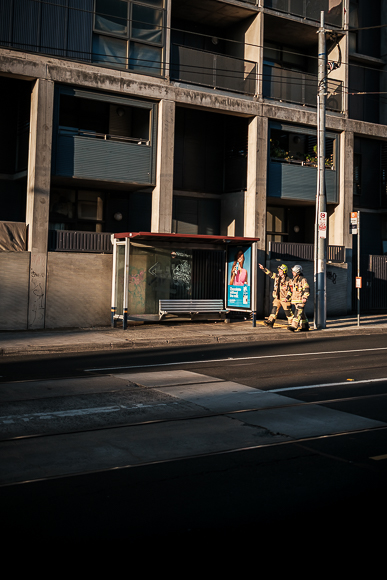
I often tell people that new gear won’t make you a better photographer. It’s true that if you are new to the craft, rushing out to buy a lens for every occasion and genre will only leave you broke and deflated. You can’t master photography through gear alone. It’s funny that I tell people these things, and yet I have just bought a new lens to replace one of the same focal distance. Am I a hypocrite? In my defence, I have shot with the Fujifilm XF 23mm F2 since it launched in late 2016. So I have been using this lens for close to 80% of my images over a ten-year period. It was time for an upgrade, and I am overjoyed to discover that the XF 23mm F1.4 is allowing me to take my craft to the next level. So perhaps I should change that first statement to: “New gear won’t make you a better photographer, but the right gear will definitely help”.
Where To From Here?
Since owning the XF 23mm F1.4 R LM WR prime lens, I have taken it out on a number of street walks and also back to the skate park. I am still getting to know this lens, how it performs in various lighting conditions, and how to make the most of its fast aperture. That’s a learning process that will take as long as it needs to. I am thoroughly impressed with the performance and outcomes from the XF 23mm F1.4. It inspires and pushes me to be even more creative with a shallow depth of field. One thing I do have to be mindful of is the weight of the new kit and how that impacts my ongoing neck issues. It’s almost 1kg and much heavier than my usual street kit. However, I have paired the camera with a Lucky Straps Slim 30 Leather Camera Strap to provide enough support and comfort when carrying the camera slung across my body. It hangs down to my right side, where the camera sits in my hand, ready to bring it up to my eye. Another positive of the new lens is that it has given me a much higher appreciation of just how well the Fujifilm X-E5 performs when paired with a pro lens. I was already impressed and very happy with the X-E5’s image quality. But once I paired it with the XF 23mm F1.4 R LM WR, I went from impressed to astounded by the increase in image quality, resolution, and dynamic range in all lighting conditions.
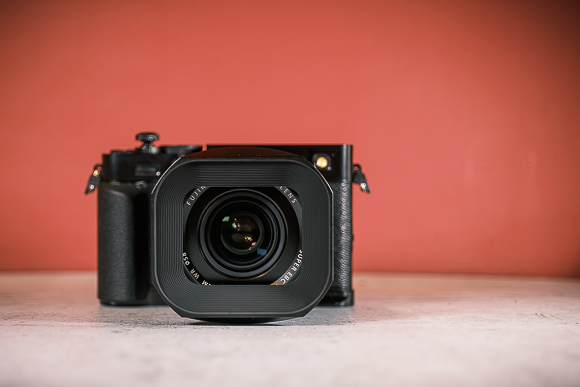
Over the years, I have bought and sold many Fujifilm lenses (and camera bodies). As I explored my craft, I moved away from zooms and even the original (first generation) F.14 Fujinon options. I opted for the lighter and more compact Fujinon F2 primes to minimise my kit. While the 23mm F1.4 is heavier and bulkier, the image quality and performance far outweigh any cons. I can see myself using this lens as my daily driver and even travelling with just the X-E5 and the XF 23mm F1.4. I look forward to pushing this new lens and camera combo to its limits in street and documentary style photography. That and taking copious amounts of photos of the cats. Be safe. G
 Greg Cromie Photography
5 Responses to Fujifilm’s Fujinon XF 23mm F1.4 R LM WR – First Impressions
Thank you for this, I enjoyed reading it immensely.
LikeLike
My pleasure. Let me know if you have any questions. Be safe. G
LikeLike
Great article Greg, even for us Fuji-curious types! You’ve convinced me to ditch the 24-105 and try the RF 28 & 35 primes when I’m in Melbourne next week…
LikeLike
Thanks so much. I love that term- Fuji-Curious! Safe travels and good luck with the lenses. G
LikeLike
[…] to more gear reviews to highlight the gear I use and why I use it. My first gear review article, Fujifilm’s Fujinon XF 23mm F1.4 R LM WR – First Impressions, details my early experiences with a new, pro-level prime […]
LikeLike