Hey, and welcome to my blog, where I talk about my life as a parent, partner, writer, photographer, and podcaster… phew. That’s a lot to get out without needing a little lie down. While I’ve been somewhat sporadic with my blog entries over the last year or two (perhaps more), I have set myself a new 2026 challenge to blog regularly and with purpose. Now that I am no longer writing regularly for Shotkit, I have time and the words, so why not get back into my personal writing? I find great satisfaction in writing and continue to write for the Lucky Straps site. So here we are! Oh, and be sure to check out my 2025 Year In Review.
In the past, I have written an annual article about my camera bag and everything I use to create the images I love most. And, of course, the images I create for work or other audiences. In this edition of What’s In My Camera Bag, I am going to break down my photography kit into digestible chunks. While I have old and new camera gear designed to meet my varying needs, I also have a lot of peripheral gear, bags, and more that I only get out of storage when I need to use them. Given my desire to minimise the gear I carry to reduce the impact on my neck, I opt for very minimal kits. I take only what I need and make conscious decisions about how much everything weighs, how long I intend to be out, whether I am walking or taking transport, etc. To better understand what camera gear I use and carry, I have broken my kit(s) into smaller sub-kits dedicated to specific genres or opportunities. Let’s start with the basics!
Minimal Street Photography Kit

Given that I identify as a street photographer, it’s a good place to start unpacking my 2026 camera bag and kit. I’ve spoken about the many forms this kit takes, not only here but also on the Lucky Straps blog. I still stick to the idea that the less I take with me on a street walk, the more focused I will be on the hunt. Plus, keeping the weight down means I can be out and about for longer. While this is an article about what’s in my ‘bag’, for street photography, I carry one of the smallest bags on the market. My go-to street bag is a Bellroy Venture Ready Sling 2.5L in black – everything is in black! While I have other, larger sling bags from Bellroy and Crumpler (both Australian brands), I stick with the 2.5L to carry only the essentials. Here’s what’s in my sling:
- Wallet
- Keys
- iPhone 17 Pro
- Cleaning cloth
- Alcohol free lens wipes
- 2x spare Fujifilm NP-W126S batteries
- Spare SD card
- Business cards
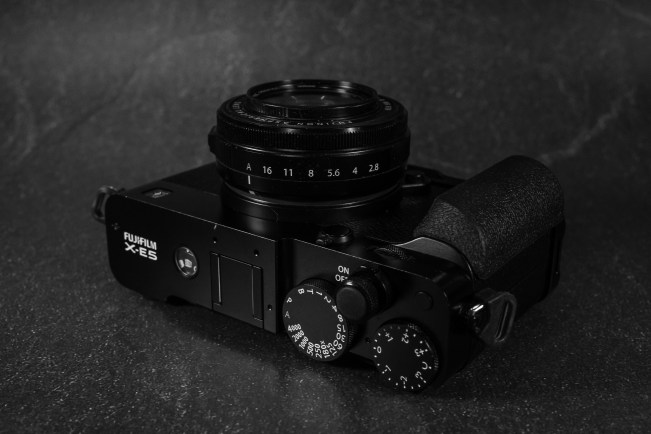
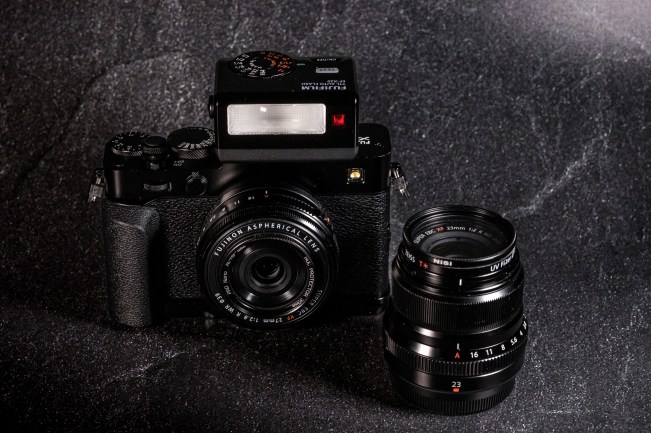
As for the camera and lens, I keep them to a minimum as well. My new Fujifilm X-E5 is an upgrade from the X-E4 I picked up at launch in early 2021. I have loved using the X-E4 as my go-to camera for work and play. Now, the Fujifilm X-E5 packs more punch and promise than its gen-4 predecessor. The Fujifilm X-E5 boasts a flagship-level 40.2MP X-Trans 5 image sensor, In Body Image Stabilisation (IBIS) and the X Processor 5 chip. It’s faster and offers greater low-light performance while remaining compact and lightweight. When it comes to lenses, I have pretty much stuck with one lens during the last few months. My primary street lens is the Fujifilm XF 27mm F2.8 R WR pancake prime – this is the gen 2 version with weather sealing and an aperture ring. The XF 27mm delivers a 40mm full-frame equivalent focal range that’s great for everything from landscapes and street to portraits and products. The Fujinon lens is tiny and weighs just 84 grams.
If you’ve been paying attention, you will have picked up that I don’t keep my camera (despite how small it is) in my bag. I’ve always preferred to have my camera with me whenever I’m walking the streets. Up until I went to the Bright Festival of Photography (BFOP) in October, my go-to camera strap was the Lucky Straps Deluxe Leather Wrist Strap. An amazing product that offers comfort and the assurance that my camera is always anchored to my wrist. During BFOP, though, I was often busy and needed both hands free to support Lucky Straps customers. But I also wanted my camera with me at all times. I made a change to the Lucky Straps Slim 30 Leather Camera Strap. Rather than go into too much detail, you can read more about it here. I still use a Lucky wrist strap with my Fujifilm X70; however, I haven’t taken it out much since I picked up the new X-E5. It’s not going anywhere and is still a core part of my camera kit. So the X-E5 / XF 27mm F2.8 kit stays on my body at all times thanks to the new strap. I don’t take any other lenses or cameras with me – just what’s in my hand.
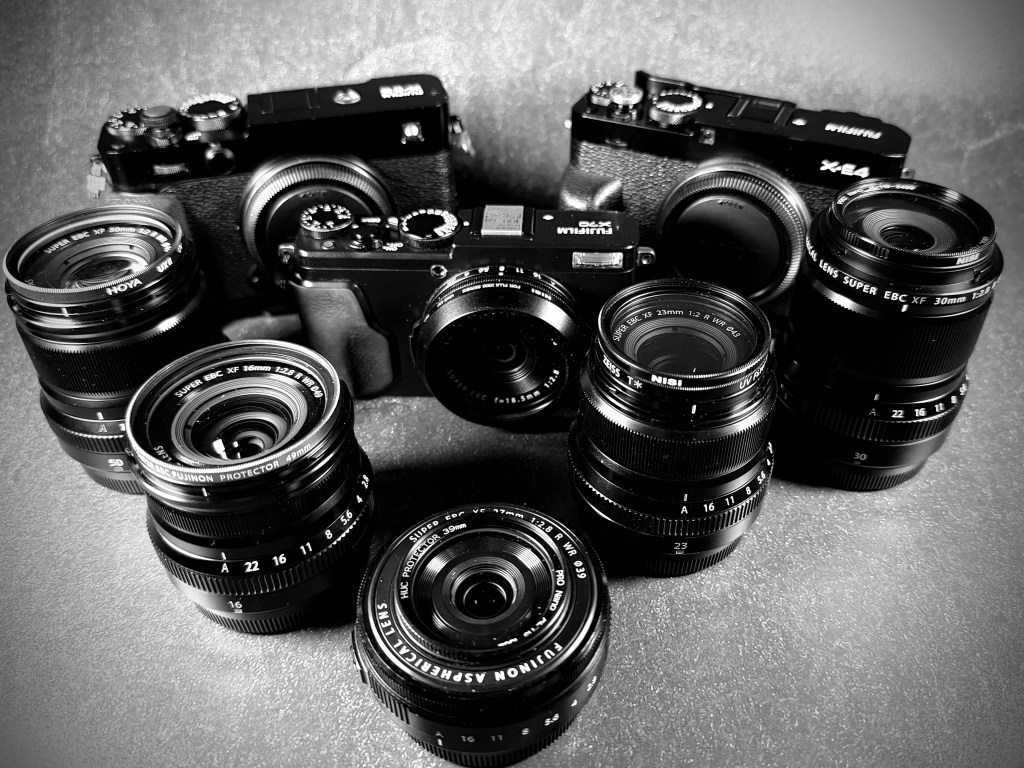
While the pancake XF 27mm F2.8 prime lens has dominated much of my recent street photography, I still have a small but mighty arsenal of primes to work with. All of them are compact and more than capable for street use.
- Fujifilm XF 16mm F2.8 – Amazing little wide-angle lens that’s great for adding more context into street scenes or capturing expansive cityscapes where scale is important. It delivers a 24mm full-frame focal distance and nice subject separation when open wide.
- Fujifilm XF 23mm F2 – My all-time favourite compact prime delivering amazing image sharpness and relatively fast focus performance. It offers a 35mm full-frame equivalent focal distance that’s close to what the human eye frames. On my last trip to Tokyo, I took only this lens and made it work.
New Macro Kit
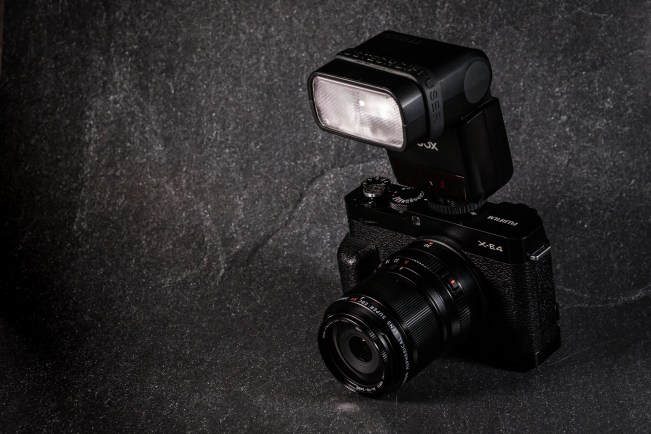
Midway through 2024, I was feeling pretty flat and a little burnt out. I needed to make a change because I just wasn’t picking up my camera much. I needed to stay creative, but my head just wasn’t in the game. I decided that a new genre with a fresh perspective was the answer. When people ask me how to get out of a creative rut, one of the bits of advice I give is to try a new genre. In most cases, I don’t recommend buying new gear to support that; it’s about working with what you have. I was intent on trying macro photography. But macro photography is fairly specialised and requires specialised gear to work. So I bit the bullet and built a macro kit from the ground up. Aside from learning the essential skills and system settings for macro, I also had to learn how flash photography is a game-changer for this kind of shoot. I will talk more about my macro photography progress in a future blog. For now, here’s the kit:
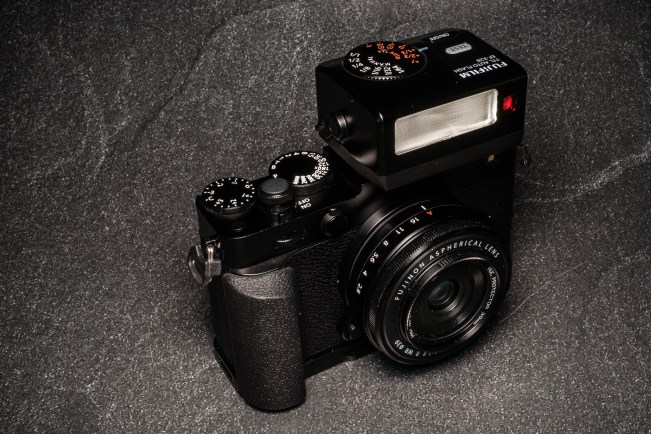
- Fujifilm X-E4 – I have kept the X-E4 primarily for macro photography. Its 26.1MP image sensor and X Processor 4 are more than capable of keeping pace with my approach. I opted not to use the newer X-E5 for this genre, as the macro lens, flash, and diffuser are fiddly to take on and off every time. But with the X-E4, the kit stays assembled and ready to use at all times.
- Fujifilm XF 30mm F2.8 R WR Macro lens – Fujifilm offers three macro lenses (30mm, 60mm, and 80mm), and there are a bunch of third-party options as well. I went with the 30mm for its price, size, weight, and optical sharpness. It delivers a true 1:1 macro view that’s more than enough for my beginner-level skills.
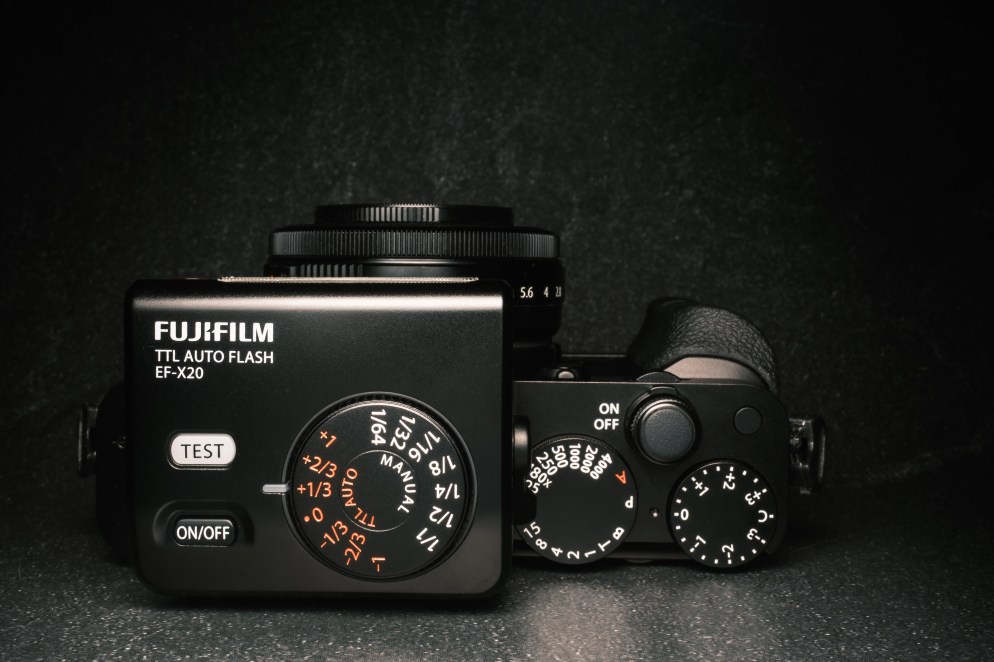
- Godox TT350 F On-Camera Flash – the Godox TT350 F is a battery-powered TTL/Manual flash with an adjustable head. I can control the flash and camera exposure through the camera menu system. It’s a smaller flash system, but more than powerful enough for my work.
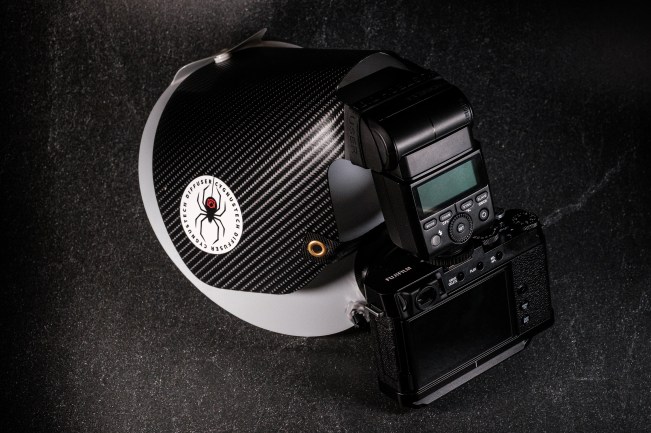
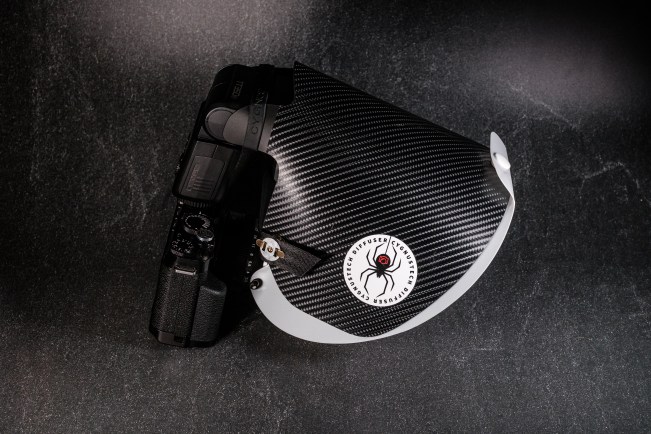
- Cygnustech Diffuser – Cygnustech is an Australian brand developing amazing macro photography diffusers. When you order one of these from the site, you have to include the camera, lens, and flash in use, and they custom-cut the diffuser to suit your setup. It’s this kind of setup that allows macro photographers to get well-exposed subjects with strong background falloff of sharpness and light. Highly recommend. 5 stars!
- Batteries and Charger – I also picked up a bunch of rechargeable AA batteries and a battery charger for the Godox flash system.
- Once again, I don’t have a bag for my macro kit or macro exploration. I keep the Fujifilm X-E4 on a Lucky Straps Deluxe Leather Wrist Strap for a secure grip. I keep the spare camera battery, AA batteries and spare SD in the same Bellroy 2.5L sling.
Big Day Out Kit?
On occasion, I have an event where I need to comfortably and securely take a much bigger kit. During 2025, I participated in the BFOP/Camera House 40th Birthday event. It was a full-day event from early morning until very late at night. Justin (Lucky Straps/The Camera Life) and I were asked to take part in the event and grab behind-the-scenes images and video for use by the BFOP team. I also took my full kit with me to the BFOP 2025 weekend – we were actually there for 5 days. On both occasions, I needed a comfortable way to carry my gear while keeping it safe. Weight was less of an issue as it was always in a vehicle in transit. For these kinds of opportunities, I use the amazing WANDRD PRVKE 21L camera backpack gifted to me by a good mate. WANDRD make award winning bags and gear for visual creatives and EDC fanatics. Given the size of my Fujifilm cameras and lenses, I can comfortably fit and carry the following kit in my WANDRD PRVKE 21:

- Fujifilm X-E4 or X-E5
- Fujifilm X70 (with its fixed 18mm F2.8 – 27mm full-frame equiv).
- XF 16mm F2.8
- XF 23mm F2
- XF 27mm F2.8
- XF 30mm F2.8 Macro
- XF 50mm F2
- Godox TT350 F
- Cygnustech Diffuser
- It also has storage space for all the bits and pieces, including SD cards, filters, batteries, a battery charger, charging cords, and a cleaning kit.
What’s Not In My Camera Bag?
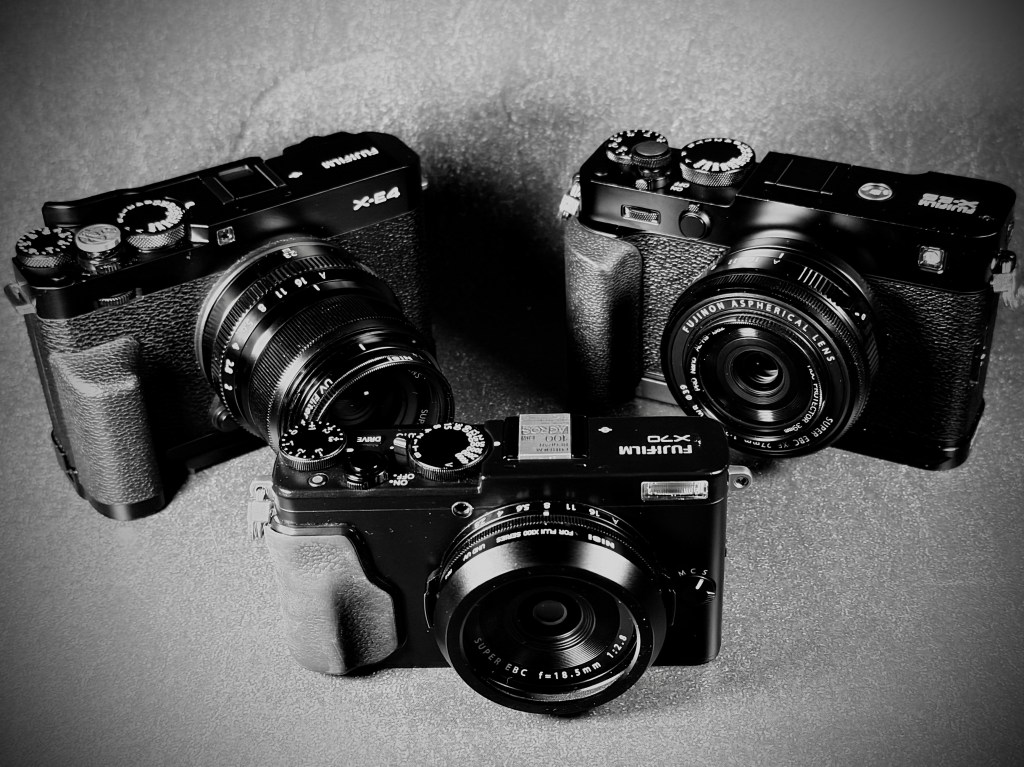
If you’re anything like me, you also have a bunch of bits and pieces, odds and ends, and accessories to amplify your craft. I am not without my fair share of stuff. When I packed for the BFOP weekend, I got everything camera-related out of bags, boxes and pouches and packed for the full festival weekend. Everything was on the kitchen bench, and it was a mess! In the future, I think I will invest in a larger Pelican camera case to hold and store everything. Here’s a bunch of other stuff that I use from time to time:
- Filters – I own a range of ND, Polarising, and Black-Mist filters to fit various lenses in my collection. I don’t use filters much other than the Clear Protection/UV glass I put on every lens as soon as I get it out of the box. It’s an insurance policy against cracked or scratched lens glass. You can easily replace a filter, but replacing or repairing a lens is a major pain in the ass.
- Lighting – Aside from the Godox TT350 F flash I use for macro, I also have a couple of small Aputure MC RGBW LED panels for product photography. I also use these to throw light in the background when I am on The Camera Life podcast. I can control the LED lights remotely via a smartphone app or manually dial in the settings. I have each of these mounted to a pair of Manfrotto PIXI tabletop tripods for ease of use.
- Flatlay Backdrops – I have two V-Flat Worlds double-sided flatlay backdrops for product photography, etc. They are made from durable, washable vinyl, and each side features a different texture: concrete, pine, granite, or stone. I also grabbed a four-pack of cheap grips to secure flatlays to tabletops, etc.
- Accessories – I also have pouches full of cleaning gear, cables, plugs, lens hoods, caps, and everything in between.
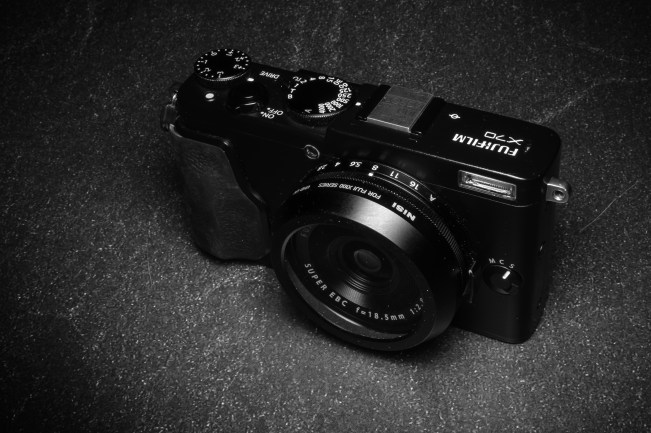
Argh, look what you’ve done. I’ve gone and gotten everything out to show you all, and now I have to clean it all up again! I hope that you’ve found this little deep dive helpful in some way. As with all photographers, my kit morphs to suit my needs and those of the images I wish to make. Weight and size are of paramount importance in any gear I purchase or carry. It’s also essential that my gear choices give me creative freedom and that ever-important joy of photography. Fortunately, Fujifilm delivers the joy in buckets. Let me know what kit you are rocking into 2026, or if you have a similar setup to mine. Stay tuned for future blogs about my street photography walks, macro hunts, and overall experience as a photographer. Until then, thanks for reading to the end and stay safe. G
 Greg Cromie Photography
3 Responses to What’s In My Camera Bag – 2026 Edition
Absolutely the less you have in a bag the better.
Your street kit looks nice and minimal, maybe even enough room for a Kodak Chimera 😉
LikeLike
Yeah agreed. I would just put everything in my pockets but I have an unreasonable fear of my pants falling down. G
LikeLike
[…] been pushing myself to add a new and purposeful blog post each week. Earlier in the year, I wrote What’s In My Camera Bag – 2026 Edition, where I detailed my Fujifilm camera and lens kit for the various genres and situations I find […]
LikeLike