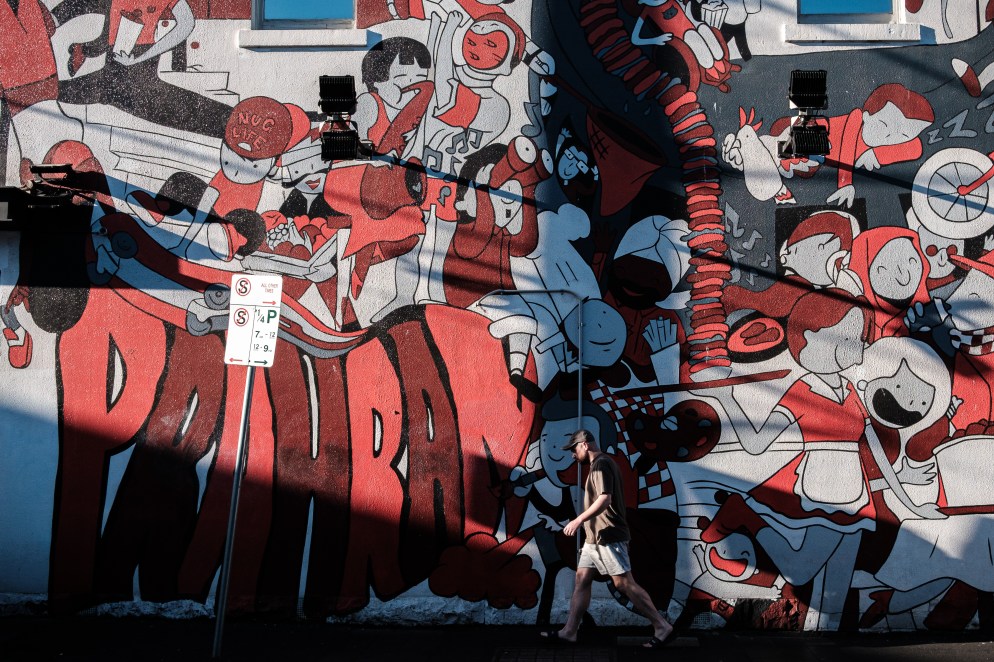
If you’ve already read my recent blog – Flash Forward To February 2024 – you will have learned that I had to take a two year break from photography due to a spinal condition. Actually, it wasn’t just photography that I had to take a break from. Life in general had to stop for me and as a result I hadn’t written on here, or for pretty much anything, for the past two years. Have a read of that blog if you’re interested in catching up. One of the most delightful bits of news I shared in that piece was how I had reignited my passion for photography. In fact, as part of my rehabilitation, I’m trying to get out and about almost every day. What’s more, I’m enjoying taking my camera with me and capturing street scenes in my local neighbourhood of South Yarra, Victoria, Australia.

Here in Australia, summer is coming to an end but there’s still plenty of light and fine weather to get out and take shots. Not that poor weather rarely stopped me. I was out early this morning once our youngest son had left for school. Between the Doctor (the nickname I use here for my partner) and I, we have five kids all still living at home. Two are still in school. Getting up early to ensure that the kids are ready to go is a good way to start the day and once the morning chores are done, get out and about with a camera in hand. Anyway, got sidetracked there. I was out this morning and realised that I had quickly fallen into one of my favorite street photography approaches of hunting for light and shadow. Next I was considering my exposure settings – or the Exposure Triangle as we tend to call it in the biz. Aperture, Shutter Speed, and ISO make up the three points on the Exposure Triangle. As a result of these thoughts and observations, I realised that I was casting back to my early days in photography where I had to walk myself through these processes and approaches to ensure I got the shot.
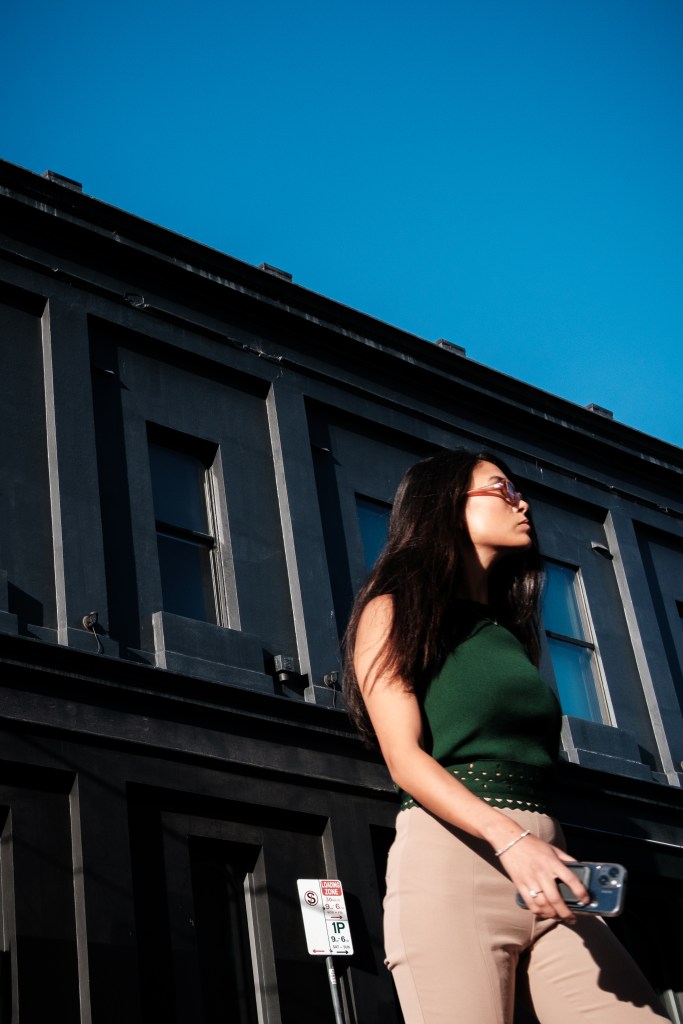
It’s funny how after years of photography experience, and in educating others, those things just become second nature. It’s like, having learnt to drive with a manual stick and you jump into a manual car years later and instantly know the process. However, given that I have only just been back into photography for a handful of weeks, I’m recalling the basics and some of my learnt approaches to street photography. I know that a lot of people reading my blogs are already talented, experienced, and educated creatives in their own rights. In fact, I have a lot of mates who are photographers in every genre imaginable and they all inspire and shape how I approach my own craft. Regardless, I thought I would write a little about my approach to MY photography. When I head out the door into the light; what do I take into account? That’s what I hope to address. To kick off this new series, I want to talk specifically about the gear that I take out with me.
The Gear – The Goldilocks Camera
When I first started out as a photographer, I believed that the more gear I had, the better my chances of getting the right style of shot with the right lens. I think a lot of people that are new to photography get caught up in the hype and fall into the trap of wanting to have a lens for every occasion. Back in the days of film photography, I had the one Canon camera body and a wide prime. That was it! When I started out with digital photography, I had Canon bodies and big heavy lenses. Too many really. Over the years I have slowly shed the weight of my digital kit. First, I moved from Canon DSLR bodies and lenses to Fujifilm – this was due to back and neck pain. The Fujifilm X Series camera system is so lightweight, neat and compact in comparison to traditional DSLR cameras. And still, even with the Fujifilm gear I have shed a lot of excess from the bag. I remember one of my first trips to Japan I took two Fujifilm camera bodies, around five or six lenses and a bunch of accessories in a big camera backpack.
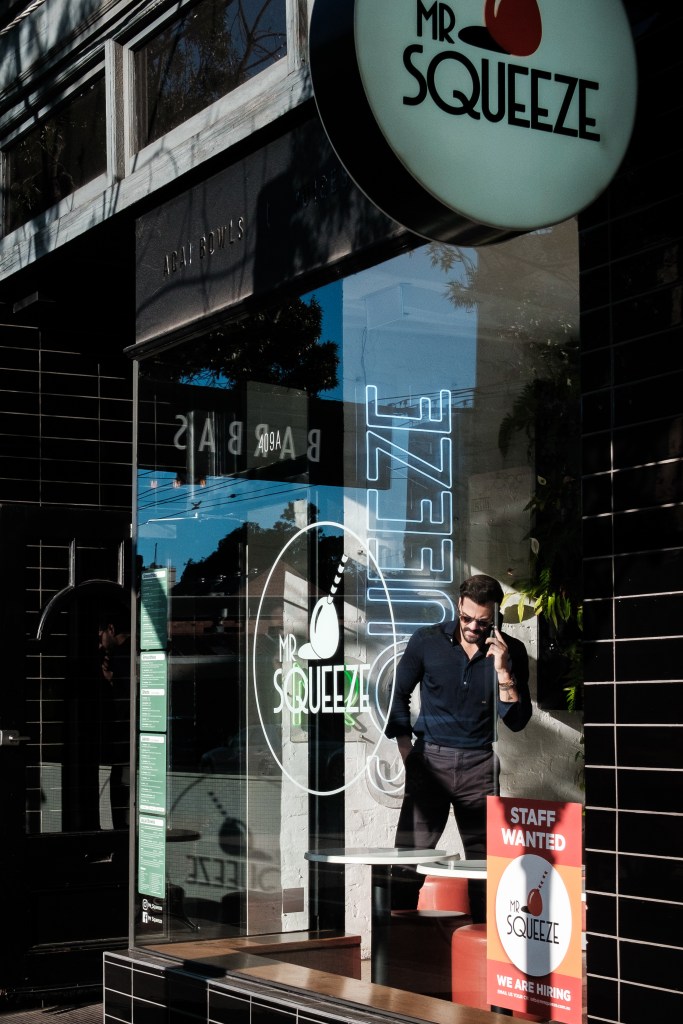
While it was relatively light compared to my past Canon kit, it was still a lot to carry especially when I did little else but walk and shoot. On subsequent trips I trimmed my kit down to one main camera body and two primes. I also always take my Fujifilm X70 as a backup – but more often than not will just take this little compact delight out and about. When it came to those prime lenses, typically it would be the Fujifilm XF23mmF2 WR and the XF16mmF2.8 WR. Both are weather resistant, have fast enough apertures and great autofocus capabilities in any light. The best bit – they are tiny! The lenses are so small I could carry one in my back pocket and the other on the camera. I always carried a bag for travel goods but the camera gear took up next to no room or weight.

As for what gear I use now during this rediscovery phase of my photography journey, I have to be very conscious of weight. Given I’ve had a cervical spine issue I don’t want to do any more damage. It seems that I am really working the whole ‘less is more’ angle when it comes to gear choices. Let’s start with the camera – the Fujifilm X-E4. I have had this camera since it first launched in March 2021 and have absolutely loved it – aside from the two year gap where I didn’t touch it. It is an incredibly versatile and compact Fujifilm X Series camera body. Without a lens, the X-E4 weighs just 364 grams. I have added the official Fujifilm X-E4 metal grip and thumb rest – brining the total weight up to 465 grams. For those in the know, the Fujifilm X-E4 is larger than the X-70 but not as big as the highly sought after Fujifilm X100 series bodies. As far as I am concerned, It’s the Goldilocks of the Fujifilm street photography cameras.
The Gear – The Teeny Tiny Lenses
As for the lenses, I still love the small and discreet Fujifilm F2(ish) range of prime lenses. Since I began my Fujifilm X Series journey, I’ve had my fair share of zooms and prime lenses. Zooms are incredibly versatile and if you’re unable to reach you subject on foot, then you have the zoom function to cross that distance quickly and effortlessly. Zooms can be used in any given situation – and as Fujifilm continue to fill in the gaps with new zoom len ranges the possibilities are endless. Having said that, a prime lens can be just as handy and can be applied to almost any situation. I reckon that at about this point some of you may be scoffing at my ignorance. Photographers the world over will debate what zooms, primes, telephoto, macro lenses and more can and can’t be used for. But just hear me out!
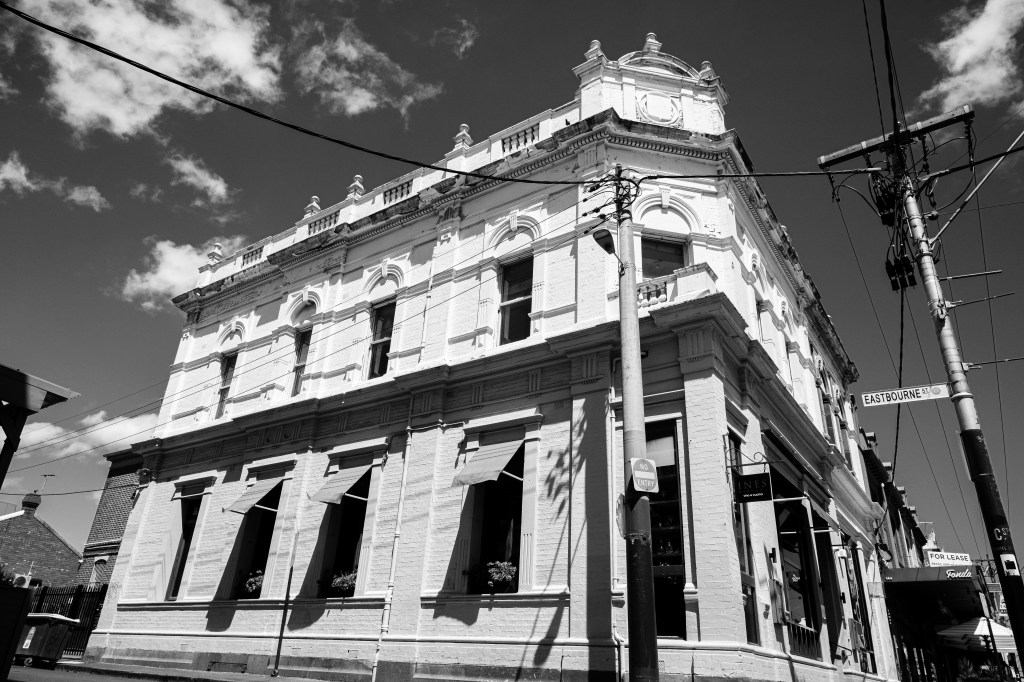
As part of the Australian Fuji X Aus Facebook group, we have a wide range of photographers of all skill and experience levels. We have a lot of passionate and enthusiastic new photographers that call upon the group for advice on everything from gear to editing help. It’s one of the things I love about this group – everyone is super friendly and willing to help and learn from one another. One of the most common questions I see in this group is: ‘What’s the best lens for street/wedding/wildlife/travel/macro/asto/event/food photography?’ It’s an important question that most people will ask at some point in their journey. Lots of people respond with their advice – including me. If the question is specific then I will more often give specific answers to support them.
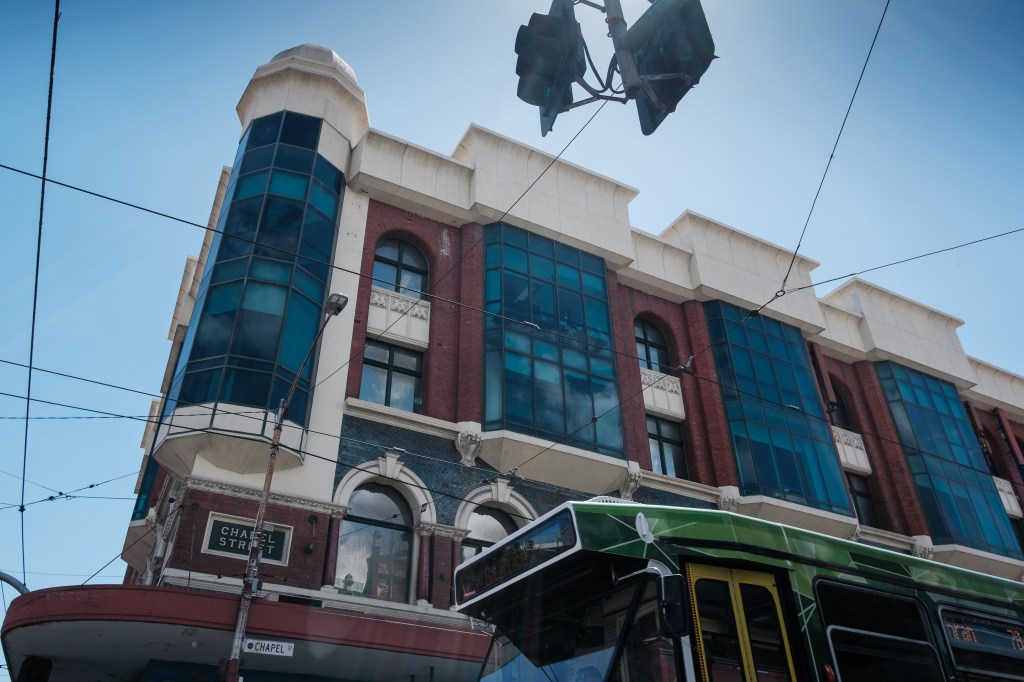
At other times, I will be very, very vague and will ask what lenses they already have in their kit. Once I have a bit more info from them, I’ll likely say: ‘For now, that’s the best lens for street/wedding/wildlife/travel/macro/asto/event/food photograph!’ I’ve become a big fan of people shooting with what they have. If you want to shoot food photography and only have a 18-55mm zoom, then shoot with that. Or, if you want to shoot street photography but only have a 70-200mm, then get out there and try shooting street photography with that. Don’t have a macro lens; then shoot with a wide prime. Don’t have a zoom lens in your kit, try zooming with your feet first. Shoot with what you have! Drop whatever lens you have onto your camera and get out or get in and take shots with it. Use it to the point of knowing how it performs in low light, in bright sunshine, in good weather and bad. Use the lens in full auto and then learn how it works with manual zoom and manual aperture. Try that same lens in as many different settings and genres as possible.

This is a photography lesson that I learned over years of carrying and juggling multiple camera bodies and a bag for of glass. The more you carry, the bigger the camera bag you need to carry it in. What’s more, carry too many lenses and you’ll likely need a camera backpack to carry them. My question is, ‘What good will all that glass do sitting on your back?’ Granted, if you’re going on a trekking shoot where you want to capture landscapes and wildlife, then there’s a place for the big bag, glass and tripods. But until then, shoot with what you have and carry less. I’ve found that with this approach, I’m less likely to be missing shots while I fumble around in my camera bag to get the ‘right’ lens. Or worse, you have to take that backpack off, open it up, swap the lens while exposing your sensor to the elements. Plus, working with less allows you to focus on all other elements of your experience – positioning, composition, light, subjects, and of course the Exposure Triangle. Plus, and most importantly, you just focus on the joy of photography.
Let’s talk about my current lens options and how I approach deciding what to take out with me. Over the past month or so, I have found absolute joy in going out the door with my Fujifilm X-E4 and a single lens attached to the camera body. Currently, I am working with three compact and lightweight Fujifilm prime lenses. Some of you may recall that I used to own a lot more however, due to my health and lack of work, I sold a lot of my gear when I became unwell. But it’s important to note that at the moment I don’t crave for more. Here’s my lenses and what I use them for.
Fujifilm XF23mmF2 WR – The Cream Of The Crop
This is by far my favorite lens in the entire Fujifilm X Series range! I know it’s a bold claim to make of a relatively cheap little prime lens. But keep in mind that prior to my break, I had shot with almost every Fujifilm lens and camera body. The Fujifilm XF23mmF2 WR is a tiny 203 gram prime lens with a nice wide F2 aperture. For me, the 23mm (63.4-degree) wide field of view is the sweet spot – the Goldilocks – of focal distances. While it is borderline wide angled, it is close to a human-eye field of view. It captures subjects perfectly and enough background for context – making it perfect for street and travel photography. The 9-bladed aperture delivers wonderful subject separation wide open and lovely crisp detail when shot at F4-8. The Autofocus is fast and silent, and the manual aperture ring allows me to dial in my settings quickly and confidently in any situation. It’s the lens that I used the most on my past two trips to Japan and many of the images featured here where shot with this lens. I love it! This lens and X-E4 combo weigh in at 669 grams.
Fujifilm XF27mmF2.8 WR – Pancakes Anyone?
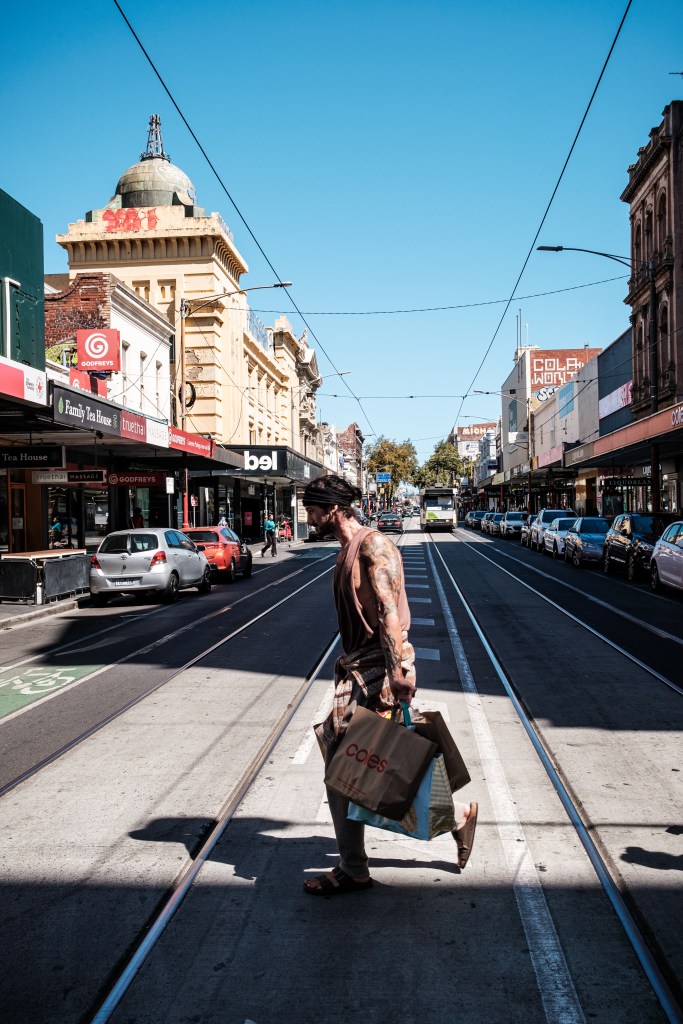
Another cracker of a lens is the teeny tiny Fujifilm XF27mmF2.8 WR. The original XF27mmF2.8 was another early release from Fujifilm. It was a fun and compact pancake lens with a nice natural field of view and sharp image quality – if not a little slow on the autofocu. A couple of years ago, Fujifilm decided to give it a refresh with the exact same size, aperture, and build, but with the addition of weather resistance – hence the WR. Some say that they didn’t improve the autofocus performance or image clarity, but having owned both lenses, I am fairly certain that Fujifilm made a few tweeks. It’s not lighting fast, but it feels quick, responsive and lacks some of the focus lag that the original 27mm had. And I reckon it’s a little sharper. The Fujifilm XF27mmF2.8 WR was the very last lens that I purchased. It released in early 2021 – around the same time as the Fujifilm X-E4. When paired with the X-E4, the Fujifilm XF27mm looks like it’s home. It’s size, weight, and styling suit the X-E4 perfectly – in fact, I’ pretty sure Fujifilm marketed the two together. It weighs a miniscule 92 grams and is a wonderful street lens – but the slightly narrower field of view is good for a whole range of styles and approaches. This lens and the X-E4 combo weigh in at 557 grams. THE Goldilocks!
Fujifilm XF16mmF2.8 WR – Going Wider
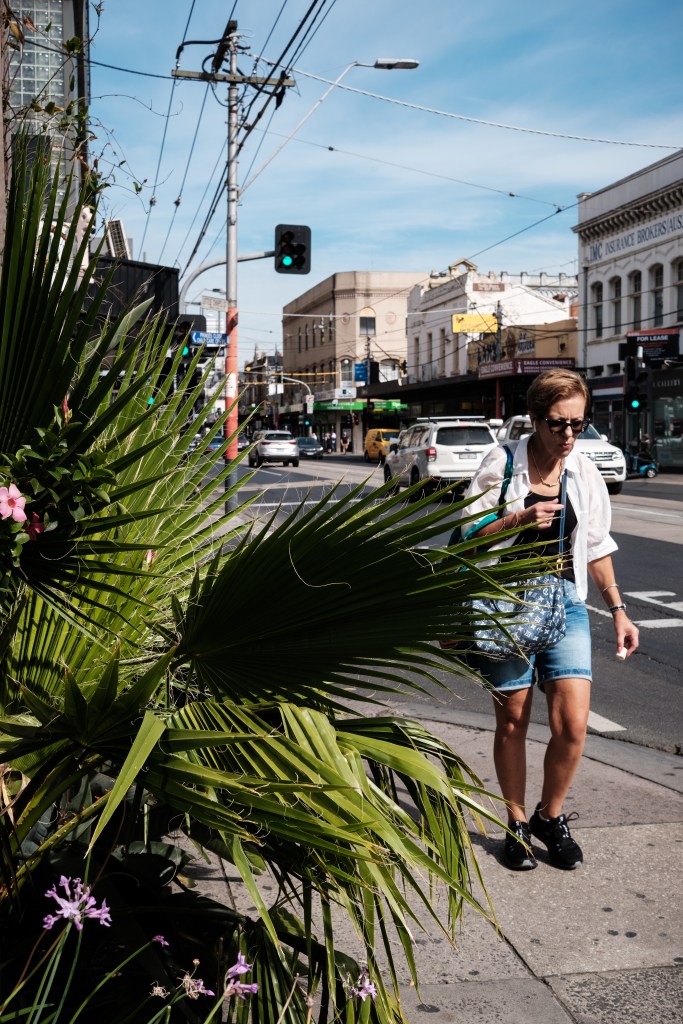
Te final lens that I own is the Fujifilm XF16mmF2.8 WR compact wide prime. It’s a gorgeous little lens and so incredibly lightweight at just 184.5 grams. Again, this is another wonderful lens that takes up next to no room in my kit and, even if I did take the other two lenses with me, the total weight is minimal. The XF16mmF2.8 is a wonderful travel lens with fast and responsive autofocus, and an aperture that ranges from F2.8 to F22. If I wanted to shoot landscapes then I would probably opt for this lens on my camera. As for my street work, the 16mm (83.2-degree) wide field of view allows me to capture scale of surrounding buildings or environments. What’s more, being wide, it works wonders with the leading lines of gutters, tram lines, power lines and building rooftops. The diminishing distance caused by a wide lens pulls the eye along leading lines to a focal point. This lens and X-E4 combo weigh in at 648 grams.

Accessorising My Life
We all have personal preferences for what our EDC is – EDC is your Every Day Carry. It’s a term used to describe the kinds of gear, accessories, trinkets, and the all important bag you rock with on a daily basis. My non-photography EDC is pretty minimal as I pack my Orbit key holder, slimline Bellroy card wallet (no cash for me anymore), iPhone, iPods, Japanese handkerchief, and Swiss Army Knife. It packs neatly in a mid-size Bellroy Sling – I find it hurts my neck less than a messenger bag. As it turns out, my photography EDC is not that much different. When I head out for a shoot, I typically just grab my Bellroy sling with the above essentials on board. I will grab my Fujifilm X-E4 and my lens of choice for the day and that’s it. All of my lenses are fitted with quality clear UV filters to provide protection to the actual front element of the lens. Cracking a UV protector hurts but not as much as cracking your lens open. I always ensure I have the camera fully charged and the SD card formatted for a new day.
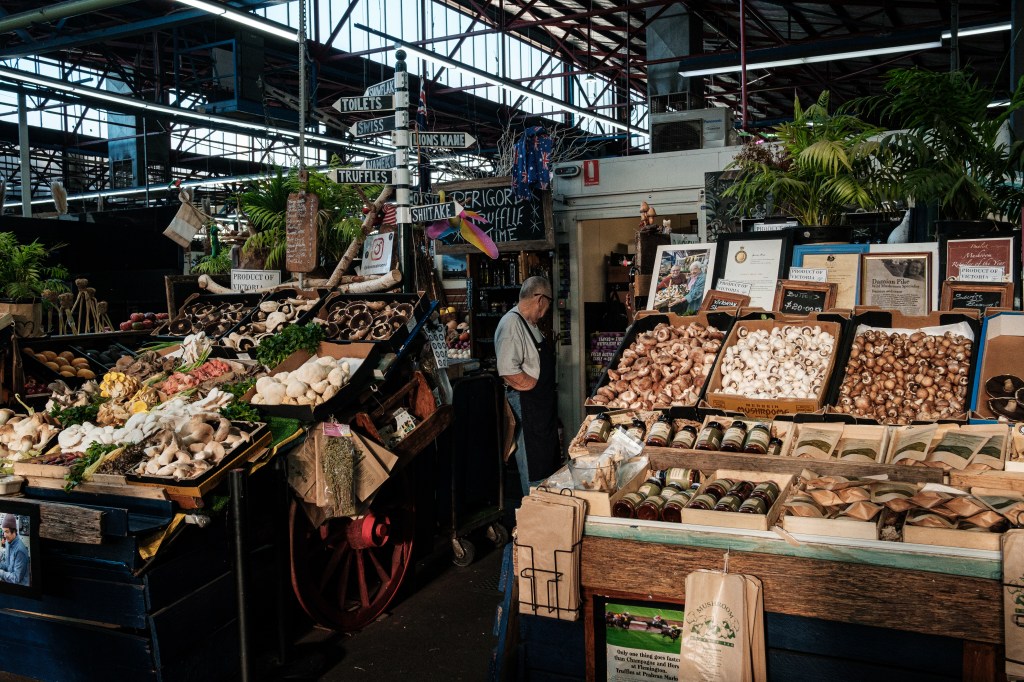
While the X-E4 and lens combo will fit in my sling with the other bits and pieces, I rarely do so. In fact, I rarely take the camera out of my hand. I always shoot handheld with a Cura wrist strap. I have spoken about Cura wrist straps, neck straps, and camera cleaning products a lot in the past. They are a Japanese family owned company creating amazing accessories. I’ve been a big fan of their products for years and often look out for them when in the big camera stores in Tokyo. My philosophy is this: If you have a camera in your hand, you’re response time to see and take the shot is vastly reduced. If you have a camera around your neck, over your shoulder, or worst case in your bag, you’re chances of missing the shot are vastly increased. Photography is all about managing the camera to capture light and time – both of which are fleeting. The moment could be lost. The shot could be missed.

It is very rare for me to take another lens out and about on a street shoot. Granted I am not travelling outside of my own neighbourhood most of the time. Regardless, I choose a lens and head out the door and practice what I preach. I have to make the lens I have chosen work for me to take the shot. I zoom with my feet, I step back, I get down low or I shoot from up high. I’ll get to my process in a little more detail in a later entry in this series. Aside from the camera in hand, and the EDC sling, I will sometimes pop a spare battery in my bag. But generally I just go with what I have on me. I’m developing a bit of methodology about my approach to street photography which I will flesh out here more as we go along this journey.
What’s The Point Greg?
That’s pretty much a wrap on how I am optimising my gear choices as part of the rediscovery I am currently embarked upon. For those of you reading along at home, I guess there are a few key takeaways that I’d like to reiterate in the hopes that they serve you too.

I know it’s a cliche, but less really can be more when it comes to photography. Spend less time in your camera bag hunting for lenses and more time enjoying the moment and how the light falls across your composition. It’s also important to fret less about having the best lens for the job and just shooting with what you have. You’ll learn far more from that process than you ever will from having a lens for every occasion.
Whilst I’ve been guilty of desiring, craving for and owning Fujifilm flagship, top-shelf cameras and lense, there’s something humbling in having a simple discrete kit. For one, it weighs a lot less and makes for greater endurance and physical enjoyment. There’s less worry about potential damage or security concerns when carrying around a $3000 camera versus a $1000 one. Plus, the smaller, compact, and incredibly discreet camera often goes unseen out in the world. But even working with an older model with less bells and whistles is hugely rewarding and educational.
I’ve continued to learn valuable lessons as a photographer and I think that’s part of the point of the whole thing. At the end of the day, photography allows us to experience, experiment, and learn about ourselves as hunters of fractional moments in time when the light falls just right. Happy Shooting. G

 Greg Cromie Photography
5 Responses to Rediscovering The Light – The Gear
[…] exploring the process of getting back into photography after a two year break. In my last entry, Rediscovering The Light – The Gear, I broke down my methodology and processes for the photography I shoot with and take with me on […]
LikeLike
[…] If you’ve been reading along at home, you’ll have already seen my recent blog entries Rediscovering The Light – The Gear, and Rediscovering The Light – The Community. In those two articles, I discuss how I’ve […]
LikeLike
Thankyou for taking the time to write this article.
LikeLiked by 1 person
[…] Welcome back to my current blog series, where I explore my love of photography. I also use this blog to document my thought process, practical applications, and methodology behind my approach. I’ve covered a number of topics already in this series, with the most recent covering the camera settings I apply when I shoot street photography. You can check out that entry here – Rediscovering The Light – Controlling Time And Light. I was forced to take a two-year break from photography due to poor health. Now that I’m well again I’ve been getting out and about a lot with my cameras. I work with a Fujifilm X-E4 and the Fujifilm XF 16mm F2.8, XF 23mm F2, and XF 27mm F2.8. I also shoot with my beloved Fujifilm X70 with its fixed 18.5mm F2.8 lens. You can read more about my preferred gear here. […]
LikeLike
[…] Rediscovering The Light – The Gear, I discussed what led me to move from larger Canon gear to Fujifilm X Series cameras and lenses. […]
LikeLike