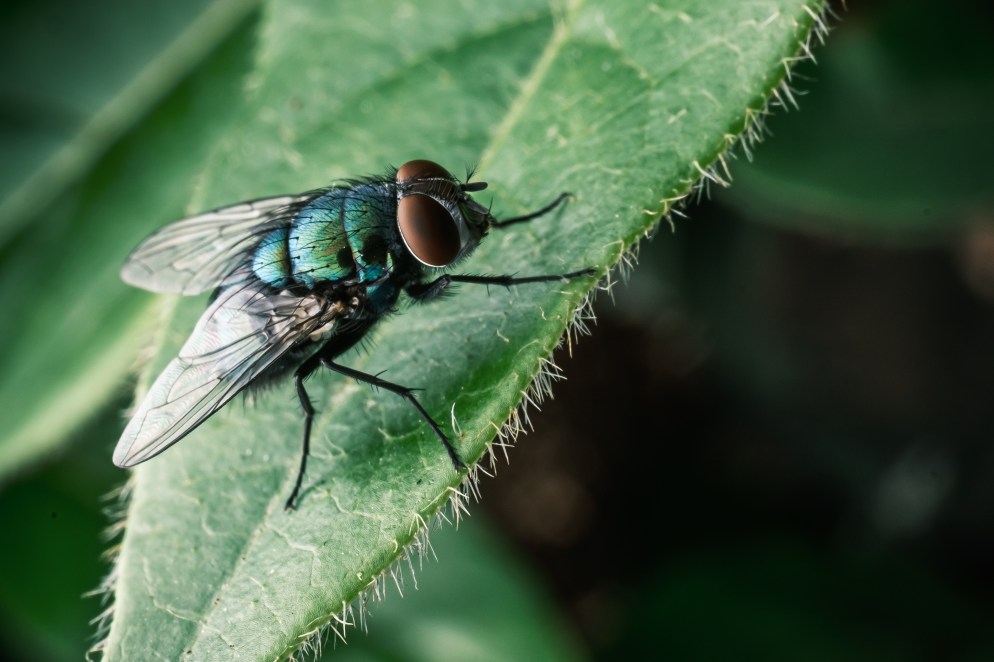
Hi there, and welcome to my blog, where I explore and share my life as a photographer, writer, podcast host, gamer, partner, and Papa! I’m sure that list gets longer every time I write it. If you’ve been keeping up with my articles (thanks), you will have noticed I’ve been writing more personal pieces on this site. One of my photography/creative goals for 2026 was to be more intentional with my writing and return to the glory days of regular blog updates – not sure about that ‘glory’ bit. In today’s article, I want to explain in a little detail why The Fly was my favourite photo from 2025. But Greg, you’re a street photographer, why is a close-up image of a fly taking first place? It’s a good question, and if you read on, you will discover why.
Midway through 2025, I felt a little lost in my craft and needed to change my motivation and subject matter. It’s not that I ran out of things to photograph on the streets. But I was feeling demotivated and uninspired about walking the streets of South Yarra (again) or Melbourne’s CBD (again) to capture light and compositions. I was in a rut, and it’s not the first time, and it’s likely not the last. I’ve been in numerous ruts I have had to pull myself out of over the years. It goes hand in hand with my mental health. When I am down or highly anxious, I find the idea of going out in public to take photos confronting and overwhelming. Of course, I know that if I got out and walked, I would actually feel better both physically and mentally. But getting out the door is sometimes tough. And that’s where I found myself during Australia’s winter of 2025.
I needed to make a change to support my mental well-being through new, mindful activities and journeys. The highlight event of the year, the Bright Festival of Photography (BFOP), was still months away. Fortunately, I have lots of incredibly supportive people in my life – especially my partner, The Doctor (She is real and not a figment of my imagination. She just prefers anonymity.) While our budget is tight at times (we are a family of 8), we made room for me to invest in some gear and push my craft into new territories. And by “new territories,” I mean life on a macro level. As mentioned in a recent blog (My 2025 Year In Review), I had dabbled with macro photography here and there over the years. As a Fujifilm fanboy and gear reviewer, I have tested both the XF 60mm F2.4 Macro and the beastly XF 80mm F2.8 – that is a gorgeous bit of glass. The 60mm macro lens is just shy of 14 years old – it was one of the OG Fujinon lenses for the X Series. As for the 80mm, it’s amazing but expensive – especially as a lens for a new genre. Fortunately, Fujifilm offer a third macro lens – the Goldilocks of macro glass. The Fujinon XF 30mm F2.8 R LM WR Macro lens is an amazing macro lens that’s also versatile for portraits. The XF 30mm Macro lens weighs just 195g (in line with my need for compact, lightweight gear), features a 43mm filter thread, and measures 60mm x 69.5mm. Beyond that, the Fujinon XF 30mm F2.8 R LM WR boasts Fujifilm’s faster Linear Motor (LM) focusing system and a robust weather-resistant (WR) design. While 30mm (45mm full-frame equivalent) isn’t a typical macro lens focal range, I applaud it for its ability to include more context in the wider frame.
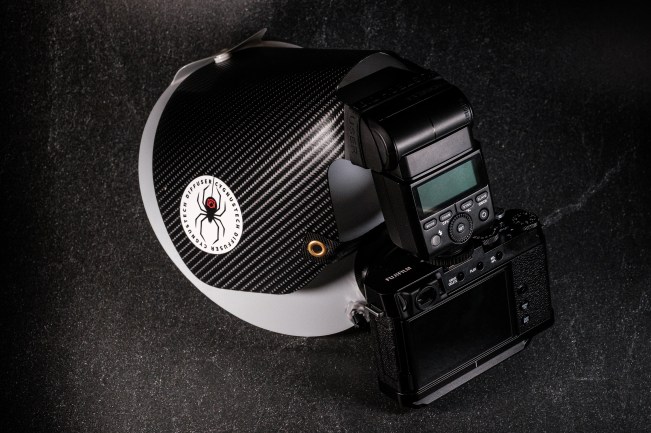
With my lens chosen and on its way, I needed two other items for this new line of pursuit. When photographing at an ultra-close distance, a macro lens captures only a thin slice of in-focus content. To achieve a greater depth to the subject, you need to shoot at much narrower apertures. The narrower the aperture, the more the subject is in focus. But closing down an aperture to F16 or F22 also throttles the amount of light passing through the lens – in short, it results in underexposed images. To combat this, the first thing I needed was an on-camera flash to elevate exposure and correctly light the tiny subjects. I had owned Fujifilm and Godox flash units before, using them for events and portraits. The Fujifilm models are expensive, so I picked up the Godox TT350F on-camera flash, along with rechargeable batteries and a charger. The TT350F offers TTL and Manual flash modes, making it ideal for beginners to manually control exposure and review results. Last but not least, I ordered a Cygnustech Flash Diffuser to suit my kit. Cygnustech is an Australian company developing and producing macro flash diffusers. The diffuser fits your camera-mounted flash and lens, directing the light to the front of the lens to illuminate your subject effectively. It’s an ingenious product that comes flat-packed and is relatively straightforward to attach. What I love about the Cygnustech product (apart from its game-changing role in macro photography) is that each diffuser is custom-made to suit your camera, flash, and lens of choice. That way, you know it will be a perfect fit.
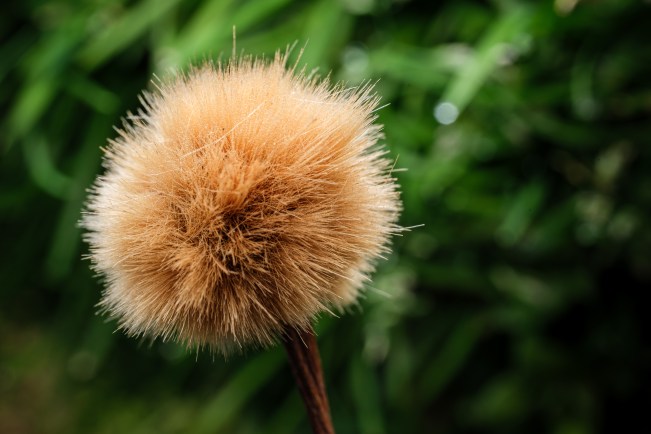
The final piece of the macro puzzle is the camera. As mentioned in my most recent articles, last year (just before BFOP), I tested and reviewed the new Fujifilm X-E5. I had been shooting with the Fujifilm X-E4 since it launched at the start of 2021. I fell in love with the new, compact yet powerful X Series interchangeable-lens body. It’s roughly the same size as the ever-popular Fujifilm X100 VI yet affords interchangeable lenses. The X-E5 has become my workhorse for street photography, events, product shots, and everyday carry. As for the Fujifilm X-E4, it is now my dedicated macro camera system. While the X-E5 offers a significant step up in specs and performance, the X-E4 more than delivers when capturing macro subjects. The Fujifilm X-E4 packs a 26.1MP APS-C X-Trans CMOS 4 image sensor and X-Processor 4. It weighs only 364g, ensuring that it is comfortable to handhold for long durations – fitted with a Lucky Straps Deluxe Leather Wrist Strap, of course! So that’s the kit, but what about the images?
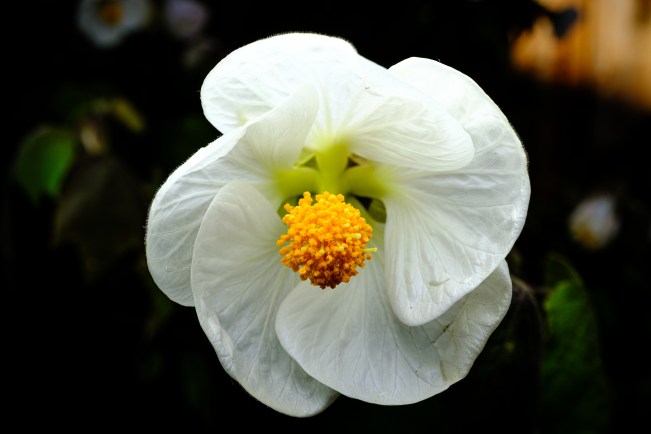
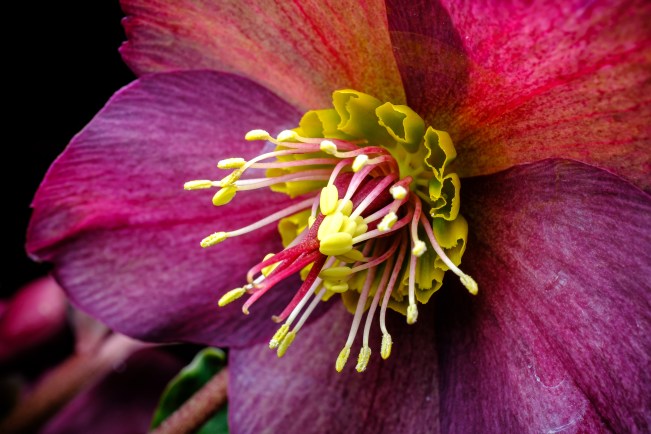
Enough of the gear talk. The first time I took my new Fujifilm macro out was towards the end of winter 2025. I live in the inner city, but there are plenty of parks in the Prahran/South Yarra (Melbourne) area for some basic macro experience. I set up my kit and headed out the door with my camera in hand and nothing else – no camera bag, no distractions. There’s a small community garden at the end of my street, so I headed there to see what I could spot. Upon arriving, I made an interesting observation (it was interesting to me). When I am out and about shooting street photography, my gaze is trained to look ahead at eye-level while scanning the scene left to right and up. But while out capturing macro, I am always looking down. It becomes a hyper-focus to scan the ground with great purpose to spot a flower, plant, or insect. I suddenly became so intent on the tiny details at my feet. They were everywhere I looked. To get warmed up, I started photographing plants, leaves, and the early-spring flowers in the garden. I photographed everything that offered any level of interest or detail at the macro level. It was a great way to slowly introduce myself to this new genre, and I used this time and experience to understand how the camera settings, lens, flash, and diffuser worked in unison to capture detailed close-ups.
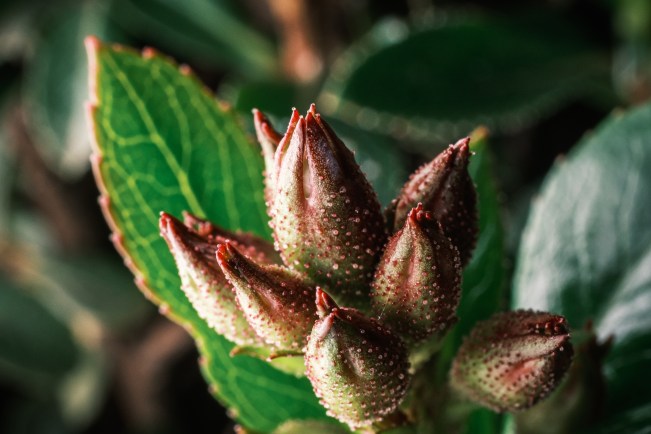
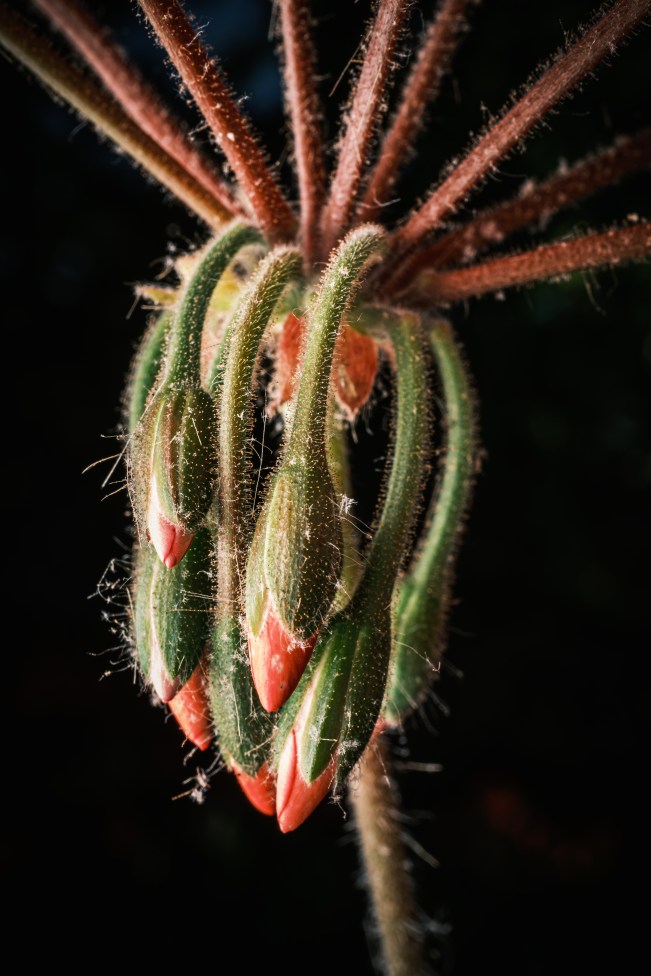
But what about the bugs, beetles, creep-crawlies, and insects? And let’s not forget the arachnids – I have a theory that spiders are an alien species. Who needs eight legs, eight eyes, the ability to cast strong thread from your butt, and the potential to bite and kill humans? That’s some alien crap right there! As it turns out, photographing insects is really bloody tricky. For one, you have to be able to spot an insect before you can take its portrait. I spent ages, bent over, scanning the bushes for a willing subject. The second issue is that even if you find a suitable bug, you then have to shove a camera/lens/flash/diffuser combo right up close. More often than not, the gear scared the subjects away before I had a chance to lock focus. I quickly discovered that macro demands patience and trial and error. Undaunted, I used my first outing to photograph a number of flowers, seeds, and plant structures in glorious detail.
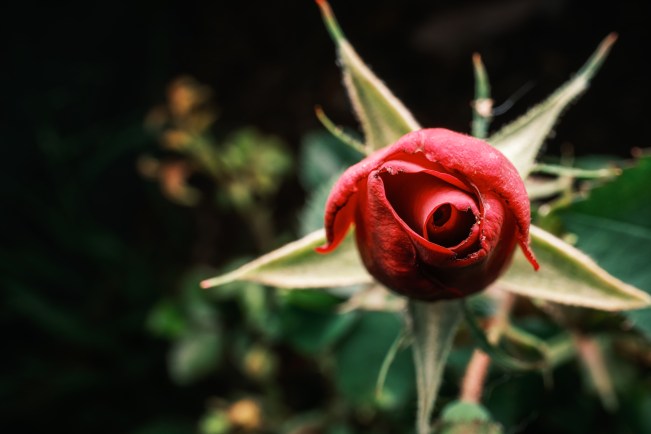
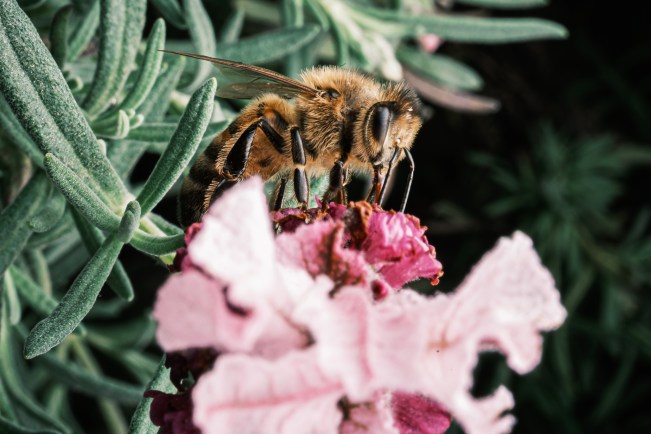
Over the following weeks and months, I experimented with my new macro kit to improve my approach, skill set, and outcomes. I found great joy in taking walks while mindfully seeking my next subject. On some walks, I would come across buds, flowers, succulents, and more, and I would take the time to photograph them. On some occasions, I would find a willing insect (at least one that would give me a few extra seconds to grab a shot). However, I found it frustrating not to be able to capture more successful 1:1 macro shots of insects. I think that was the greatest teacher of all. I was so keen to find and photograph tiny subjects that I lost sight of the bigger picture. Street photography is often a fast-paced genre, as I am always on the move, as are most of the subjects in my compositions. But, as I discovered, macro is very different, and it’s a game about patience, observation, and appreciation. I changed my approach and set out to take walks with my macro kit, taking the time to observe insect behaviour at different times of day. I also gain some insight from others in my community about photographing insects – thanks, Felicity. As it turns out, I was out photographing insects when they were most active. These little guys are so busy doing their thing that they don’t have the time to stop for a photo opp. I changed my approach and timing, heading out later in the day (around golden hour) when the insects are less energetic and more likely to take a little rest.
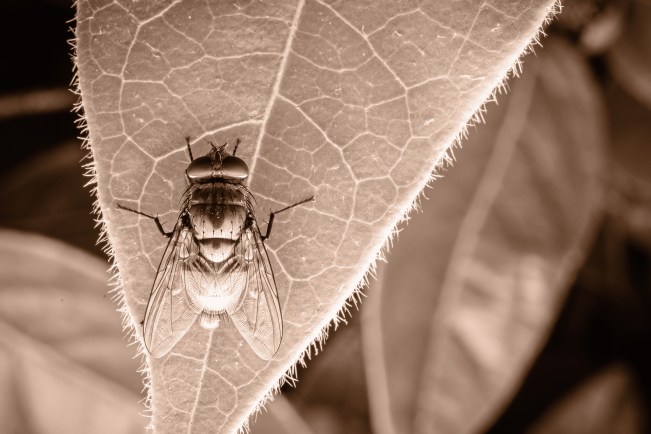
As for the image of The Fly, I caught it at the end of a macro-photo walk on my way home. My eye was still trained on the ground, tree trunks, and bushes when I came across The Fly. He was just sitting on a leaf and chilling out. I made my introductions with assurances I meant no harm before squatting to get the best angle. To my surprise and delight, The Fly sat perfectly still while I took several images of him at the end of his day’s work. At the time, I wasn’t sure whether I had gained enough exposure or whether the details were as sharp as I’d hoped. Satisfied, I bid my farewells to the little guy and returned home. Upon downloading and reviewing my images, I was so incredibly happy to find that The Fly was tack-sharp and rich in macro-detail. The Fly became my favourite image of 2025 as it signified a few things for me. One is that you can teach an old street photographer new tricks, and that, through patience, trial, and error, a new skill can be attempted and refined. It also taught me about the importance of a creative practice in managing mental health. I guess that standout lesson from The Fly is that I do have skills and I am capable of more than just candid street scenes. The Fly signifies change, challenge, and the importance (for me anyway) of pushing the boundaries of a creative life. To discover new ways to express your love and the application of a creative process.
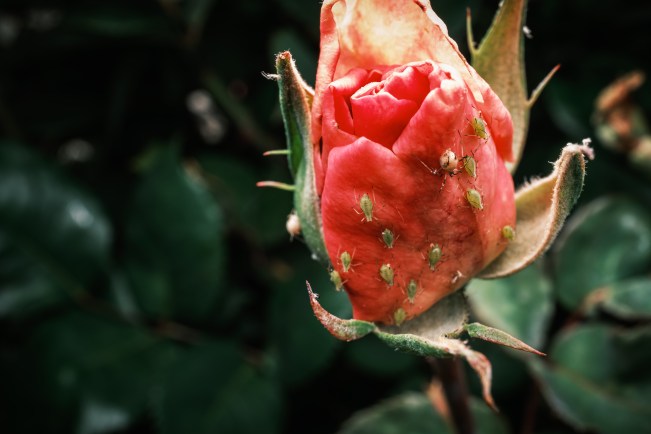
I have continued to explore macro photography, and having a dedicated macro kit ready at a moment’s notice entices me to grab it and head out. I took the kit with me to Bright when I attended BFOP and managed to take a couple of long walks while hunting for blooms, blossoms and bugs. The bugs still elude me, but I am now more at peace with documenting what is before me rather than worrying about what is not. I continue my experiments and experiences with my macro hat on and look forward to building upon this promising start. Thanks for reading along. Be safe. G
 Greg Cromie Photography
One Response to Why The Fly Was My Favorite Photo From 2025
[…] seven articles on this site, including Street Photography With Old Friends…And The Fujifilm X70, Why The Fly Was My Favourite Photo From 2025, and Prahran Skate Park With A New Fujinon Lens! More on that later. I have also written my first […]
LikeLike